Quick Answer
- To keep a car amplifier cool, give it open air on all sides, mount it the right way up, run it at an impedance it is rated for, and set the gain so it does not clip.
- Heat is wasted power. Class AB amplifiers are around 50 to 65% efficient and Class D amplifiers about 85% (Sound Certified, 2023), so a Class D amplifier has far less heat to shed.
- Leave space around the heatsink: at least 1 inch according to Rockford Fosgate, and 4 inches according to Kicker (Kicker, 2019).
- Bass boost adds heat quickly. Every 3 dB of boost needs double the amplifier power at those frequencies (MTX Audio, 2026).
- Thermal protection is not a defect (MTX Audio, 2026). If it trips often, fix the cause instead of only adding a fan.
To keep a car amplifier cool, mount it where air can move around the heatsink, never upside down or under carpet, and remove the things that make it work harder than it should: a speaker load below its rated impedance, gain set too high, heavy bass boost and undersized power wiring. A cooling fan helps in a tight space, but an amplifier that is installed and set up correctly should not need one.
Why Car Amplifiers Get Hot
A car amplifier gets hot because part of the power it draws never reaches the speakers. Crutchfield explains that the power that does not make it to the output terminals is wasted energy that turns into heat (Crutchfield, 2026).
How much is wasted depends on the amplifier’s class. Sound Certified puts Class D amplifiers at about 85% efficiency and Class AB amplifiers at around 50 to 65% (Sound Certified, 2023). A Class AB amplifier delivering 300 watts can therefore turn 150 watts or more into heat inside its case.
The heat comes from the transistors. BestCarAudio gives an example: a MOSFET passing 10 amps through 0.22 ohms makes 22 watts of heat, and eight of them at full load waste 176 watts (BestCarAudio, 2022).
Our explainer on how a car amplifier works covers amplifier classes and efficiency in more detail.
How Hot Is Too Hot for a Car Amplifier?
Warm is normal, and too hot to keep your hand on is a warning. Manufacturers rarely publish the temperature at which thermal protection trips, so the best figures come from testing.
In a BestCarAudio bench test, a Rockford Fosgate P300X2 ran for 28.5 minutes at 360 watts before shutting down with its heatsink at 203 F (BestCarAudio, 2022). Two poorly designed amplifiers in the same test shut down in under four minutes.
Taramps, an amplifier manufacturer, offers a simple hand test (Taramps, 2025):
| Heatsink feel | Approximate temperature | Meaning |
|---|---|---|
| Hand stays on for 10 seconds or more | 95 to 113 F (35 to 45 C) | Normal |
| Cannot hold for 10 seconds | 122 to 140 F (50 to 60 C) or more | Running hot |
| Too hot to touch | 194 F (90 C) or more | Critical overheating |
Touch the heatsink briefly at first. If the amplifier has been shutting down, it may be hot enough to burn.
What Makes an Amplifier Overheat
Most overheating has a cause you can fix. Rockford Fosgate’s support team names four: blown or grounded speakers, inadequate power and ground wire, impedance that is too low, and gain or bass boost set too high (Rockford Fosgate, 2026).
| Cause | Why it adds heat | Fix |
|---|---|---|
| Impedance below the amplifier’s rating | More current through the output devices | Rewire the speakers to a higher load |
| Gain too high, clipping | The amplifier is driven past its limit | Reset the gain |
| Bass boost | Double the power for every 3 dB | Turn it down or off |
| Undersized power or ground wire | Low voltage and resistive connections | Use thicker copper wire |
| Blocked airflow | Heat cannot leave the heatsink | Move or re-mount the amplifier |
| Shorted or damaged speaker | Abnormal load on a channel | Test and replace the speaker |
Step 1: Give the Amplifier Room to Breathe
Air space is the first fix, because a heatsink only works if air can carry the heat away. Crutchfield says an amplifier needs a few inches of air space around it to stay as cool as possible (Crutchfield, 2026).
Manufacturers set their own minimums. Rockford Fosgate’s Prime manual asks for at least 1 inch of air gap around the heatsink (Rockford Fosgate, 2019). JL Audio asks for at least 1 inch above the amplifier (JL Audio, 2019). Kicker’s CX manual asks for at least 4 inches of open ventilation, and suggests mounting in the climate-controlled passenger compartment if possible (Kicker, 2019).
Three placements cause most trouble:
- Under carpet or behind trim with no gap. MTX advises against fully enclosed spaces and mounting directly against carpet (MTX Audio, 2026).
- Packed in with luggage, tools or a spare wheel that block the fins.
- In the engine compartment. Rockford Fosgate says never to mount an amplifier there, and that doing so voids the warranty (Rockford Fosgate, 2019).
Mounting position is part of a good install. Our guide on how to install an amplifier in a car covers locations and wiring together.
Step 2: Mount It the Right Way Up
Heat rises, so the heatsink should face up or to the side. Crutchfield states that an amplifier should never be mounted upside down, because the dissipated heat radiates back into the amplifier (Crutchfield, 2026). JL Audio’s manual strongly discourages upside-down mounting as well (JL Audio, 2019).
Vertical mounting can work well. Rockford Fosgate notes that mounting an amplifier so its heatsink fins run vertically creates a chimney effect, where rising warm air draws cooler air in from below (Rockford Fosgate, 2022). If you mount the amplifier on a seat back or a side panel, turn it so the fins run up and down.
Step 3: Check the Impedance Load
An amplifier driving too low an impedance runs hot no matter how well it is ventilated. Rockford Fosgate explains that the lower the total impedance, the more the speaker system requires of the amplifier (Rockford Fosgate, 2022). MTX warns that below its minimum stable load, an amplifier typically goes into protection and can overheat or sustain permanent damage (MTX Audio, 2026).
Efficiency drops at low impedance too. One subwoofer amplifier tested by BestCarAudio was under 60% efficient into 1 ohm (BestCarAudio, 2022).
Check how your subwoofers are wired. Two 4-ohm subwoofers in parallel make a 2-ohm load, and Rockford Fosgate gives the example of two 4-ohm subwoofers in parallel on a bridged amplifier as a load that is too low (Rockford Fosgate, 2026). Measure the load at the amplifier’s speaker terminals with a multimeter if you are unsure.
Step 4: Set the Gain and Turn Down the Bass Boost
Gain set too high makes an amplifier clip, and clipping makes heat. Rockford Fosgate states that clipping generates excessive amplifier heat and overheats subwoofers (Rockford Fosgate, 2023). MTX’s advice for an amplifier whose thermal protection trips often is to check the input sensitivity and lower the source volume (MTX Audio, 2026).
Bass boost has the same effect at one frequency. MTX explains that every 3 dB of bass boost requires double the amplifier power at those frequencies (MTX Audio, 2026). A 6 dB boost asks for four times the power.
Set the gain with the bass boost off, and add boost sparingly afterwards if you use it at all. Our guide on how to tune your car amplifier has the step-by-step method.
Step 5: Fix Undersized Power and Ground Wiring
Thin or poorly connected wiring starves the amplifier and creates heat at the terminals. Rockford Fosgate explains that improper cable size can result in inadequate voltage or current to the amplifier, and that a hot terminal indicates a highly resistive connection (Rockford Fosgate, 2022).
Its support guidance is specific: at least 8-gauge wire, with a ground under 18 inches, the same size as the power wire, bolted to bare thick steel (Rockford Fosgate, 2026). Feel the power and ground terminals after a long session. A terminal that is much hotter than the heatsink is loose or corroded.
The ground is the usual culprit. Our guide on how to ground an amplifier in a car shows how to prepare and test the connection.
Step 6: Add a Cooling Fan if Airflow Is Limited
A fan helps when the amplifier has to live in a tight space. Sonic Electronix recommends a cooling fan to blow heat away from the amplifier (Sonic Electronix, 2026). Small 12-volt fans of the kind used in computers work, and some amplifiers have a fan built in.
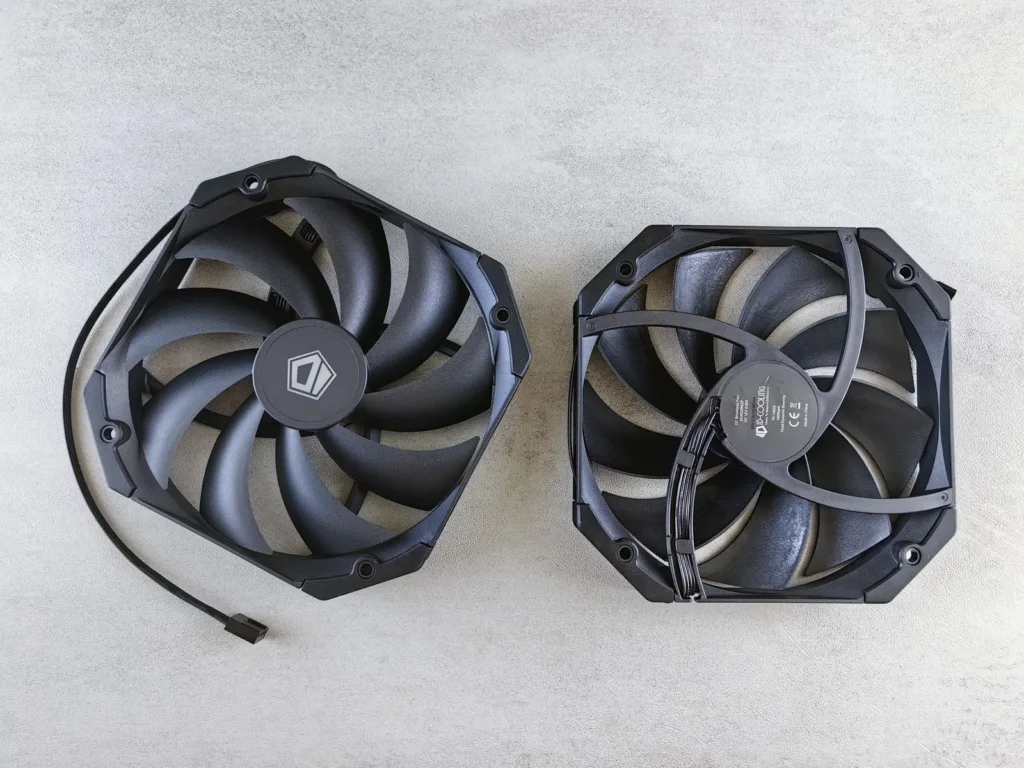
Two points make a fan installation work:
- Give the air a way in and a way out. A fan that stirs hot air inside a sealed compartment does little.
- Switch the fans with a relay triggered by the remote turn-on lead, so they run only when the system is on and take their power from a fused 12-volt source.
Treat a fan as a supplement. If the amplifier overheats in open air, the cause is the load, the gain or the wiring.
What to Do When Thermal Protection Trips
Turn the volume down and let the amplifier cool. Rockford Fosgate notes that an amplifier in thermal shutdown will often work again after it cools down (Rockford Fosgate, 2022), and MTX’s manual says the amplifier resumes after cooling (MTX Audio, 2026).
The indicator varies by brand. On Rockford Fosgate’s Prime amplifiers, the Protect/Thermal LED turns red and the amplifier mutes (Rockford Fosgate, 2019). Kicker’s manual says a very hot amplifier means thermal protection is engaged, and directs you to test the speaker impedance and check for adequate airflow (Kicker, 2019).
Repeated shutdowns shorten an amplifier’s life. BestCarAudio points out that the thermal paste between the output devices and the heatsink dries out over time, and that heat speeds this up (BestCarAudio, 2022). If the amplifier stays in protection once it is cold, see our guide on how to fix a blown car amplifier. BestCarAudio’s article on car audio amplifier cooling shows thermal camera images from its bench tests.
Frequently Asked Questions About Keeping a Car Amplifier Cool
Is it normal for a car amplifier to get hot?
Warm is normal. Taramps describes 95 to 113 F, where you can keep a hand on the heatsink for 10 seconds or more, as normal (Taramps, 2025). An amplifier too hot to touch is overheating.
At what temperature does a car amplifier shut off?
Manufacturers rarely publish a figure. In a BestCarAudio bench test, a Rockford Fosgate P300X2 shut down with its heatsink at 203 F (BestCarAudio, 2022). Other designs trip sooner.
How much space does a car amplifier need for cooling?
From 1 inch around the heatsink (Rockford Fosgate, 2019) to 4 inches of open ventilation (Kicker, 2019). Follow your amplifier’s manual, and give it more where you can.
Can I mount a car amplifier upside down?
No. Crutchfield says never to mount an amplifier upside down, because the heat radiates back into it (Crutchfield, 2026). Mount it flat with the fins up, or vertically with the fins running up and down.
Does a Class D amplifier run cooler?
Yes. A Class D amplifier is about 85% efficient, against 50 to 65% for Class AB (Sound Certified, 2023), so it turns much less power into heat. That is why Class D amplifiers suit under-seat locations.
Will wiring my subwoofers to a lower impedance make the amplifier hotter?
Yes. A lower impedance demands more current, and below the amplifier’s rated minimum it can overheat or shut down (MTX Audio, 2026). Check the minimum impedance in the specifications before you wire the subwoofers.
Summary: How to Keep Car Amplifier Cool
- Leave open air around the heatsink and never mount the amplifier upside down or under carpet.
- Run a speaker load the amplifier is rated for.
- Set the gain to avoid clipping and keep bass boost low.
- Use thick copper power and ground wire with tight connections, and add a fan only where airflow is limited.