Quick Answer
- Car stereos without an external amplifier typically produce only 10 to 25 watts RMS per channel (Crutchfield, 2026), so the biggest gains come from making every watt count.
- Fix the free settings first: set the EQ close to flat, turn off volume normalization in your music app, raise your phone’s volume to maximum and check that no volume limit is set.
- Replace factory speakers with high-sensitivity models: a speaker rated 3 dB more sensitive needs half the power for the same volume (Crutchfield, 2026), and ratings above 90 dB suit low-powered stereos.
- A high-power head unit roughly doubles clean output; Sony’s High Power receivers deliver more than 45 watts per channel compared with about 20 watts for a typical radio (BestCarAudio.com, 2019).
- Sealing the speaker to the door panel, adding sound deadening and filtering out deep bass make the same power sound louder and cleaner.
To make car speakers louder without an amp, get the most out of the power your stereo already has: use a strong source signal, set the EQ so the stereo does not clip, replace factory speakers with high-sensitivity models, and seal and deaden the doors so less sound is wasted. If that is still not enough, a high-power head unit roughly doubles the clean power without adding a separate amplifier.
Why Car Speakers Sound Quiet Without an Amplifier
Car speakers sound quiet without an amplifier because the stereo’s built-in amplifier is small. Factory radios typically produce 10 to 25 watts RMS per channel (Crutchfield, 2026), and many aftermarket head units sit in the same range, even when the box says “50 watts x 4,” which is a peak figure.
Two things limit loudness at that power level. The first is clipping: turn the volume past the stereo’s clean limit and it distorts instead of getting louder. The second is efficiency: many factory speakers turn only a small share of that power into sound, and doors that rattle or leak air waste more of it.
Every step below attacks one of those limits. None of them requires wiring in an amplifier.
Step 1: Fix the Settings That Hold Volume Back
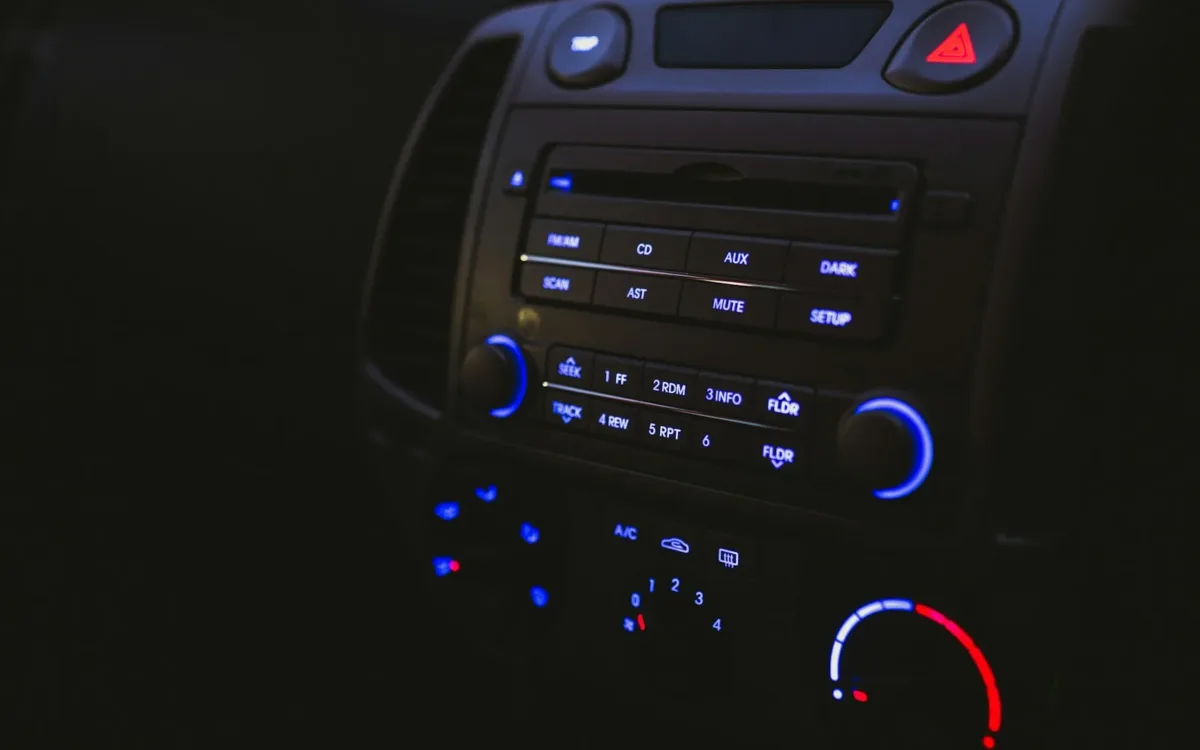
Start with the settings, because they cost nothing and often explain a quiet system. Set the EQ close to flat, center the balance and fader, and check the stereo’s menus for a maximum volume limit or a “start-up volume” cap that some cars set by default.
On your phone, raise the media volume to maximum when streaming over Bluetooth or USB, and control loudness with the car’s volume knob. A phone at half volume sends a weaker signal, so the stereo runs out of range sooner. Many streaming apps also normalize volume by default; set normalization to “loud” or turn it off.
Speed-sensitive volume and loudness settings help at low levels but add bass boost that can make a small stereo clip earlier. If the system distorts before it gets loud enough, turn loudness off and keep bass boosts to 2 or 3 dB.
Step 2: Use a Stronger Source Signal
Use the connection that gives the strongest, cleanest signal. A wired USB connection, or wired Apple CarPlay or Android Auto, usually plays louder and cleaner than Bluetooth, and a high-quality stream carries more of the bass and treble that make music sound full.
Some recordings are also mastered quieter than others, which is why one album seems weak compared with the next. That is a recording difference, not a fault, and normalization settings in your app affect it too.
Step 3: Replace Factory Speakers With High-Sensitivity Speakers
Replacing factory speakers with high-sensitivity aftermarket models is the most effective way to get more volume without an amplifier. Sensitivity measures how loud a speaker plays on 1 watt at 1 meter, and a speaker 3 dB more sensitive needs only half the power for the same volume (Crutchfield, 2026).
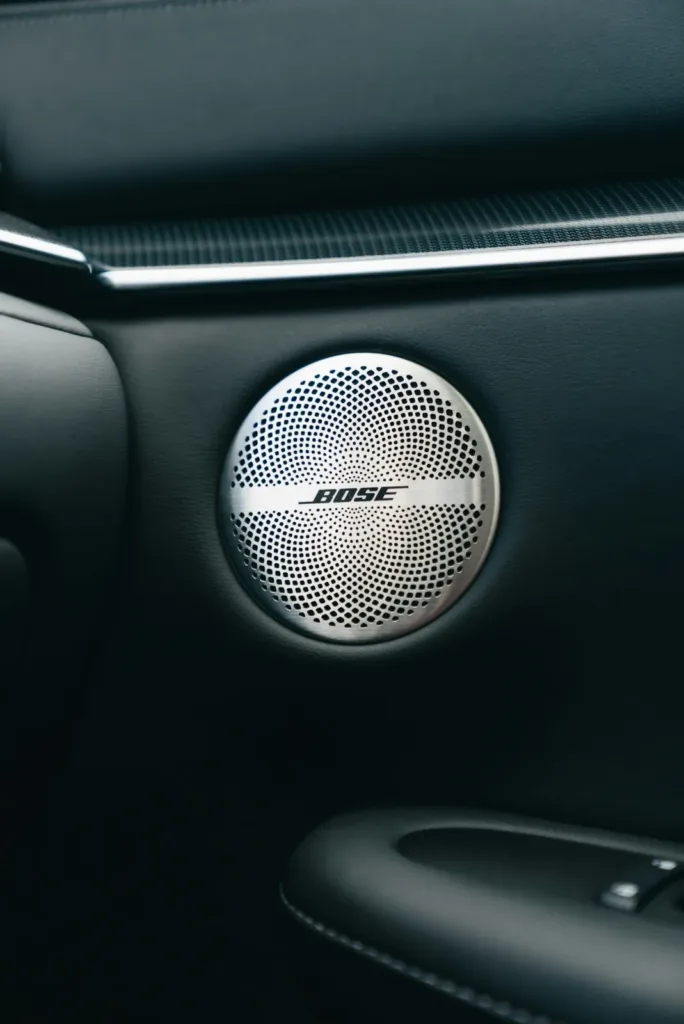
Crutchfield’s car speakers buying guide recommends speakers rated above 90 dB for low-powered factory stereos of around 10 to 15 watts RMS per channel (Crutchfield, 2026). As an example, Kicker’s CS series 6.5-inch coaxial is rated at 90 dB sensitivity (Kicker, 2026).
| Speaker sensitivity | Power needed for the same volume |
|---|---|
| 85 dB | 4 times as much as a 91 dB speaker |
| 88 dB | 2 times as much as a 91 dB speaker |
| 91 dB | Reference |
Choose speakers with a low RMS power rating that suits a head unit as well; a speaker designed for 100 watts often sounds lifeless on 15. Before you buy, confirm the size and mounting depth for your car; our guide on how do you measure car speakers explains what to check.
Step 4: Install a High-Power Head Unit
If you are replacing the stereo anyway, choose a high-power head unit. Most radios use a built-in four-channel amplifier chip that makes about 20 watts per channel into 4 ohms, while Sony’s High Power receivers deliver more than 45 watts per channel (BestCarAudio.com, 2019).
Doubling power raises maximum output by about 3 dB, a clear step up. More importantly, the stereo reaches your usual listening level with more headroom, so drums and vocals stay clean instead of clipping. Compare head units on RMS ratings measured to the CTA-2006 standard rather than on peak power.
Step 5: Seal the Speakers and Add Sound Deadening
Seal the speaker to the door and quiet the door itself, so less sound escapes inside the door and less is covered by road noise. Foam rings around the speaker frame direct sound through the grille, and constrained layer damping (CLD) tiles on the door skin stop the metal from vibrating.
You do not need to cover the whole door. In independent testing shared by ResoNix Sound Solutions, a CLD square covering 25% of a test panel reduced resonance by 16.5 dB (ResoNix Sound Solutions, 2023). A quieter car also sounds louder at the same setting, because the music has less road noise to compete with.
While the door panel is off, check that the speaker is screwed down tightly and that no wires or clips rattle against the panel.
Step 6: Filter Deep Bass Out of Small Speakers
If your head unit has a high-pass filter (HPF), set it around 80 Hz for the door speakers. Deep bass takes most of a speaker’s cone movement and a large share of the stereo’s power, but small door speakers cannot reproduce much of it. Filtering it out lets them play the midrange and vocals louder and cleaner.
The trade-off is less deep bass. If you want that back later, a compact powered subwoofer adds it without an external amplifier for the door speakers, because its amplifier is built in. In a full-size truck, our picks for the best subwoofer for an F150 SuperCrew include powered under-seat options.
Step 7: Check Speaker Wiring and Polarity
Check that every speaker is wired with correct polarity. A speaker connected backward moves inward while its partner moves outward, and the two cancel much of each other’s bass, making the whole system sound thin and quiet.
Play a bass-heavy track and pan the balance fully to one side, then back to center. If the bass is stronger from one side than from both together, one speaker is likely out of phase; swap its wires at the connector. Replacement speakers are a common cause, because aftermarket terminals do not always match factory plugs.
What Does Not Make Car Speakers Louder
Some popular tricks add distortion rather than volume. Turning bass and treble to maximum makes a small stereo clip at lower volume, and so does leaving loudness on while playing loud. Plug-in “power boosters” that connect to the speaker wires cannot add clean power without their own power supply, which makes them amplifiers.
Speaker distortion is also a warning sign. Pushing a clipping stereo is the most common way car speakers get damaged; if yours already sound fuzzy, see our guide on how to fix blown car speakers. Dust on the grilles rarely affects volume, but it is worth removing when the doors are open; our guide on how to clean car speakers shows the safe way.
When You Need an Amplifier After All
You need an amplifier when the speakers you want are rated well above your stereo’s power, or when you want clean volume at highway speed with the windows closed. No setting or speaker swap can turn 15 watts into 75.
A small four-channel amplifier with speaker-level inputs connects to a factory radio without replacing it. Our guide on how to upgrade car audio system explains where an amplifier fits in a step-by-step upgrade plan.
Frequently Asked Questions About Making Car Speakers Louder Without an Amp
Can you make car speakers louder without an amplifier?
Yes. Use a strong source signal, keep the EQ from clipping the stereo, replace factory speakers with high-sensitivity models rated above 90 dB, and seal and deaden the doors. A high-power head unit adds more clean power without a separate amplifier.
What are the loudest car speakers without an amp?
The loudest speakers on low power are those with the highest sensitivity rating, usually above 90 dB, and a modest RMS power rating. Sensitivity matters more than wattage when the stereo only supplies 10 to 25 watts RMS per channel.
Does a new head unit make speakers louder?
Often, yes. A high-power head unit can deliver more than 45 watts per channel compared with about 20 watts for a typical radio (BestCarAudio.com, 2019), which gives more clean volume. A standard aftermarket head unit gives a smaller gain, mostly from cleaner output.
Does sound deadening make speakers louder?
It makes them sound louder and cleaner. Deadening stops the door from vibrating and lowers road noise, so music is easier to hear at the same volume. It also improves midbass, because the door stops acting like a drum.
Why are my car speakers so quiet?
Common causes are a phone volume set too low, app volume normalization, a volume limit in the stereo’s settings, a speaker wired out of phase, or low-sensitivity factory speakers. Check the free settings first, then consider new speakers.
Summary: How to Make Car Speakers Louder Without Amp
- Set phone volume to maximum, turn off normalization and keep EQ boosts small.
- Replace factory speakers with high-sensitivity models rated above 90 dB.
- Choose a high-power head unit if you are replacing the stereo.
- Seal and deaden the doors, filter deep bass from small speakers and check polarity.