Quick Answer
- To tune a car subwoofer, set its controls in this order: gain, low-pass filter, phase, subsonic filter, bass boost, then the final level against the rest of the system.
- Start the low-pass filter at 80 Hz. BestCarAudio calls 80 Hz usually the optimum crossover point between a subwoofer and the front speakers (BestCarAudio, 2023).
- Try the phase switch at 0 and 180 degrees and keep whichever gives more bass at the driver’s seat (Crutchfield, 2026).
- On a ported box, set the subsonic filter a few hertz below the box’s tuning frequency. Sealed boxes rarely need it.
- Leave bass boost at zero or use it sparingly. Every 3 dB of boost needs double the amplifier power at those frequencies (MTX Audio, 2026).
To tune a car subwoofer, adjust the controls that shape its output until the bass blends with the front speakers and stops sounding like a separate box in the trunk. That means a clean gain setting, a low-pass filter that hands over to the door speakers at the right point, the correct phase, a subsonic filter that protects the driver, and a level that suits your music. Most of it takes a screwdriver, a few songs you know well and about half an hour.
The Subwoofer Controls and Where to Find Them
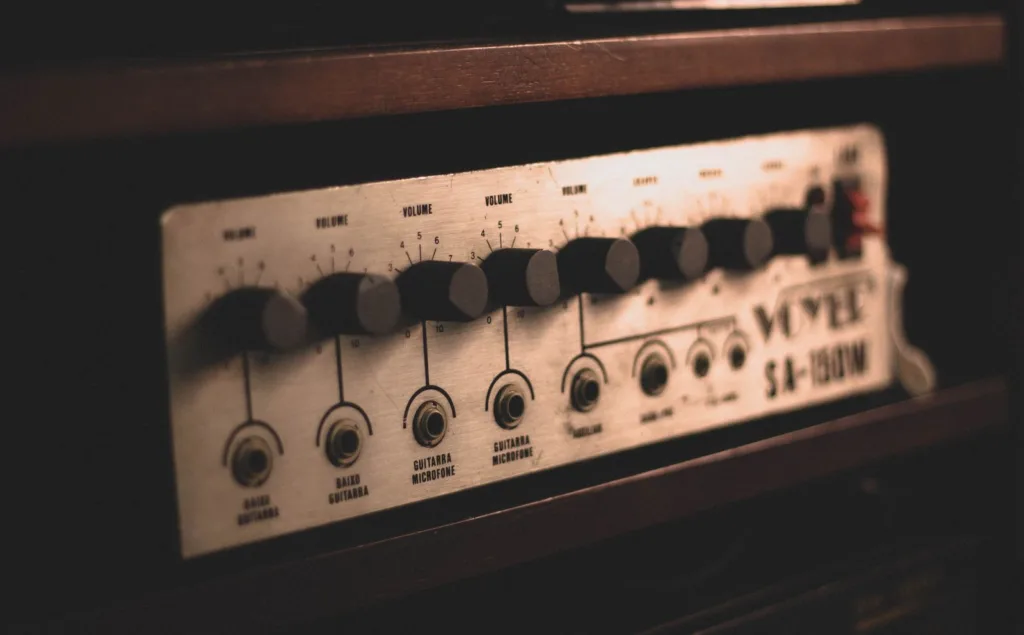
A subwoofer has no controls of its own. They are on the amplifier, in the stereo’s subwoofer menu, on a remote bass knob or in a DSP.
| Control | What it does | Typical range |
|---|---|---|
| Gain | Matches the amplifier to the stereo’s signal | Varies by amplifier |
| Low-pass filter | Sets the highest note the subwoofer plays | 50 to 200 Hz |
| Phase | Flips the subwoofer’s output by 180 degrees | 0 or 180 |
| Subsonic filter | Removes notes too low for the box | 15 to 40 Hz |
| Bass boost | Lifts a narrow band of bass | 0 to +6 dB at 40 Hz, or more |
| Level or bass knob | Day-to-day subwoofer volume | Varies |
Real amplifiers show the spread. Kicker’s CX amplifier has a low-pass adjustable from 50 to 200 Hz, a bass boost of 0 to 6 dB at 40 Hz and a subsonic filter fixed at 25 Hz (Kicker, 2019). Rockford Fosgate’s Prime amplifiers offer up to +18 dB of boost at 45 Hz and an adjustable 15 to 40 Hz subsonic filter on the larger models (Rockford Fosgate, 2013).
Stereos carry some of the same controls. Pioneer’s DEH-X3500UI, for example, has a subwoofer cut-off from 50 to 200 Hz, a level from -24 to +6 and a phase setting (Pioneer, 2026).
Use each control in one place only. Crutchfield warns not to use the filters or boosts on the receiver and the amplifier at the same time (Crutchfield, 2026).
This guide is about the subwoofer’s blend. For the wider process, see how to tune car audio, and for all of an amplifier’s controls, see how to tune your car amplifier.
Before You Start
Give yourself a known starting point. Crutchfield’s setup is the amplifier’s gain fully down, the low-pass filter on and turned fully up, bass boost off, and the stereo’s bass control flat with its own crossover and boost off (Crutchfield, 2026).
Make sure the subwoofer itself is healthy and wired to the right impedance. Our guides on how to test a car subwoofer and how to install a subwoofer in a car cover both.
Step 1: Set the Gain
Gain comes first, because every later setting depends on a clean signal. Kicker’s manual puts it plainly: the input gain control is not a volume control. It matches the output of the source unit to the input level of the amplifier (Kicker, 2011).
The quick method is by ear. Crutchfield’s version is to play music at about one-quarter volume and raise the subwoofer gain until the bass overpowers the other speakers without distorting (Crutchfield, 2026). Distortion from a subwoofer sounds like crackling, flapping, crunching or hissing.
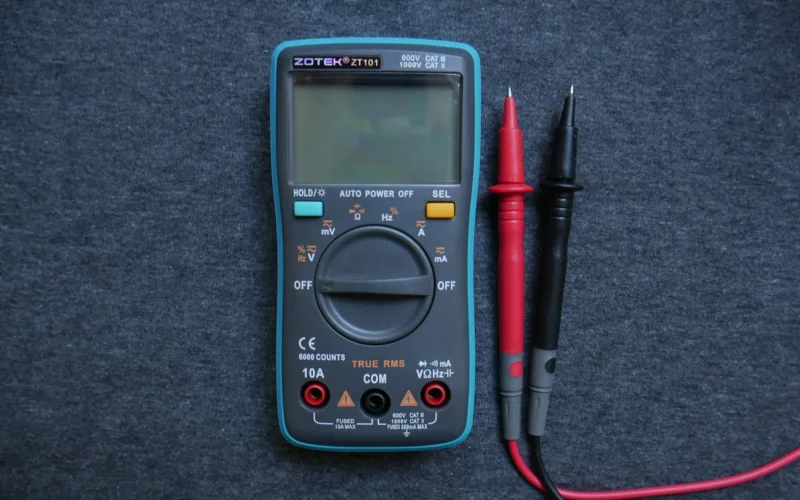
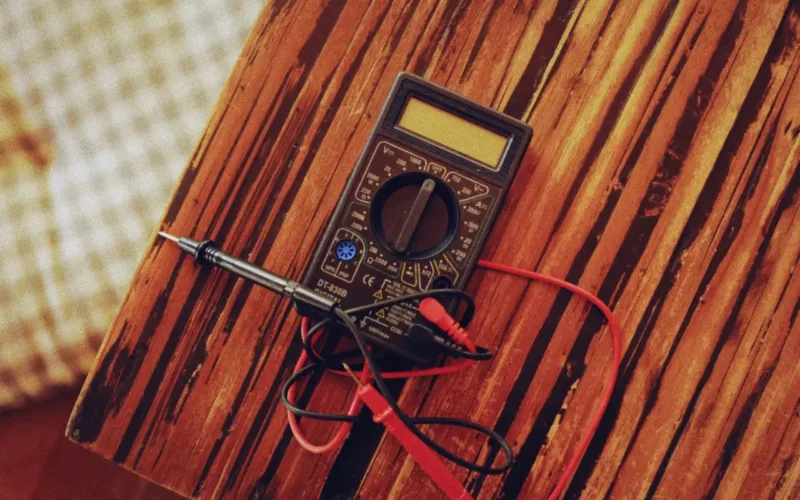
The measured method uses a multimeter. Play a 50 Hz tone with the stereo at three-quarters volume and raise the gain until the AC voltage at the speaker terminals reaches the target, which is the square root of power times resistance. MTX’s example is 500 watts at 2 ohms, which is 31.62 volts (MTX Audio, 2026). JL Audio’s manual gives 44.7 volts for 1,000 watts at 2 ohms (JL Audio, 2026).
Step 2: Set the Low-Pass Filter
The low-pass filter decides where the subwoofer stops and the door speakers take over. Set it too high and you hear voices from the trunk. Set it too low and a gap opens between the subwoofer and the speakers.
Start at 80 Hz. Kicker’s Hideaway setup starts there (Kicker, 2011), Rockford Fosgate recommends an 80 to 100 Hz low-pass at 12 dB per octave (Rockford Fosgate, 2007), and Sound Certified suggests 70 to 80 Hz (Sound Certified, 2023).
You can also set it by ear. MTX’s method: with the filter fully up, slowly turn it down until you stop hearing high frequencies, such as vocals, guitars and cymbals, through the subwoofer (MTX Audio, 2026).
Match it to the front speakers’ high-pass filter. Audiofrog’s rule is to set the subwoofer’s low-pass half an octave below the midbass high-pass, for example 60 Hz against 80 Hz (Audiofrog, 2023). Our guide to the best crossover settings for car audio has values by speaker size.
Step 3: Check the Phase
Phase decides whether the subwoofer and the front speakers push together or against each other at the crossover. Wrong phase shows up as weak, hollow bass even at high level.
The test is simple. Crutchfield’s advice: if your amplifier has a phase switch, try it, and if the bass increases, you are good (Crutchfield, 2026). Sit in the driver’s seat, play a track with steady bass around 60 to 100 Hz, and compare the two positions.
BestCarAudio explains why it matters. With 12 dB per octave filters, the subwoofer and speakers end up 180 degrees apart at the crossover, which causes a large dip in the response there. Reversing one of them fixes it, and the right setting is whichever produces the best midbass output (BestCarAudio, 2023).
If the amplifier has no switch, swap the positive and negative wires at the subwoofer. Rockford Fosgate’s manual notes that the phase switch has the same effect as physically reversing the speaker wires (Rockford Fosgate, 2026).
A DSP or a stereo with time alignment adds a finer tool: delay, which compensates for the subwoofer’s different distance from the listener (Audiofrog, 2023).
Step 4: Set the Subsonic Filter
The subsonic filter is a high-pass filter set very low. It removes notes the box cannot control, which protects the subwoofer and saves amplifier power.
It matters most with ported boxes. MTX explains that below the tuning frequency, the air in a ported box stops loading the cone, leading to over-excursion and driver failure (MTX Audio, 2026).
| Enclosure | Subsonic filter setting |
|---|---|
| Ported | A few hertz below the box’s tuning frequency |
| Sealed | Usually off, or at its lowest setting |
BestCarAudio’s worked example is a box tuned to 31 Hz with the filter at 25 Hz (BestCarAudio, 2021). Audio Intensity’s example is a 35 Hz box with the filter at 28 Hz (Audio Intensity, 2026). Both land about 6 or 7 Hz under the tuning.
For sealed boxes, JL Audio’s manual calls the filter less necessary (JL Audio, 2026). BestCarAudio’s example of a 12-inch subwoofer on 1,000 watts in a sealed box never exceeds its excursion limit, so it needs no filter (BestCarAudio, 2021).
Step 5: Use Bass Boost Sparingly
Bass boost lifts a narrow band, usually around 40 to 45 Hz, and it is the fastest way to make an amplifier clip.
The cost is power. MTX notes that every 3 dB of bass boost requires double the amplifier power at those frequencies (MTX Audio, 2026). Crutchfield warns that adding boost at any frequency after setting the gain can make the amplifier clip (Crutchfield, 2026).
Leave it at zero while you tune. If you want more kick afterwards, add a little and then turn the gain down to compensate. Kicker’s order is the same: set gain first, then fine-tune bass boost and readjust the gain if needed (Kicker, 2011).
Step 6: Balance the Subwoofer With the Speakers
Now set the level so the bass supports the music. Crutchfield’s method is to set the stereo to its maximum clean volume, then raise the subwoofer level until the bass is balanced (Crutchfield, 2026).
If the bass is loud but lacks punch, Crutchfield suggests reversing the subwoofer’s speaker leads, and says whichever way sounds best is the right way (Crutchfield, 2026).
A good target is more bass than a flat response. Audiofrog’s target curve for cars has about 10 dB more bass than midrange below 60 Hz (Audiofrog, 2023), which is why a correctly tuned subwoofer still sounds full.
Set a remote bass knob with care. Rockford Fosgate’s remote can only attenuate from the level the gain sets (Rockford Fosgate, 2026), so on that type, set the gain with the knob at maximum and turn it down for daily use. Crutchfield’s approach for boost-and-cut remotes is to leave the knob at its middle position while tuning (Crutchfield, 2026).
Signs the Subwoofer Is Not Tuned Right
Use these as a checklist after your first pass.
| What you hear | Likely cause | Fix |
|---|---|---|
| Bass seems to come from the trunk | Low-pass too high | Lower the crossover point |
| Voices or guitars from the subwoofer | Low-pass too high | Turn it down until they disappear |
| Hollow bass, no punch | Phase | Flip the phase switch |
| Boomy, one-note bass | Level or boost too high | Lower the level, turn boost off |
| Crackling or flapping | Gain too high | Reduce the gain |
| Chuffing from the port | Too much output below tuning | Raise the subsonic filter, lower the level |
Crutchfield’s fix for the first row is to lower the subwoofer’s crossover point to de-localize the bass (Crutchfield, 2026). If the bass is clean but does not go deep enough, the cause is usually the box or the filters; see our guide on how to get deep bass from a car subwoofer. Crutchfield’s full guide to making the bass in your car sound its best walks through the same order.
Frequently Asked Questions About Tuning a Car Subwoofer
What should the low-pass filter be on a car subwoofer?
Start at about 80 Hz. BestCarAudio calls 80 Hz usually the optimum point between a subwoofer and the front speakers (BestCarAudio, 2023). Adjust from there by ear.
Should the phase switch be at 0 or 180?
Whichever gives more bass from the driver’s seat around the crossover frequency. Try both and keep the fuller one (Crutchfield, 2026).
What should I set the subsonic filter to on a ported box?
A few hertz below the tuning frequency. BestCarAudio filters a box tuned to 31 Hz at 25 Hz (BestCarAudio, 2021).
Do I need a subsonic filter with a sealed box?
Usually not. JL Audio calls it less necessary for sealed enclosures (JL Audio, 2026).
Should I use bass boost on my subwoofer?
Sparingly. Every 3 dB doubles the power the amplifier needs at those frequencies (MTX Audio, 2026), and boost added after the gain is set can cause clipping.
Why does my bass sound like it comes from the trunk?
The low-pass filter is set too high, so the subwoofer plays notes you can locate. Lower the crossover point (Crutchfield, 2026).
What voltage should my subwoofer amplifier read when setting gain?
The square root of watts times ohms. 500 watts at 2 ohms is 31.62 volts (MTX Audio, 2026).
Summary: How to Tune Car Subwoofer Settings
- Set the gain first, by ear or with a multimeter and a 50 Hz tone.
- Start the low-pass filter at 80 Hz and lower it until voices leave the subwoofer.
- Keep the phase setting that gives more bass, and set the subsonic filter just below a ported box’s tuning.
- Leave bass boost off, then balance the subwoofer’s level against the speakers with music you know.