Quick Answer
- To fix rattling car speakers, find what is actually moving first. Play the song that triggers the rattle and press on the grille, door panel and door pocket one area at a time (ImproveCarAudio, 2026).
- Most rattles are not the speaker. A buzz on bass notes is often the trim around the speaker, loose mounting screws or a broken door panel clip (TheFixCar, 2026).
- Tighten the speaker, add a foam gasket or ring, replace broken clips and tape loose wiring before you spend money on new speakers.
- Sound deadening on 25 to 50% of the door skin reduces rattles and door buzz (Dynamat, 2026).
- If the rattle stops when you turn the bass down, set a high-pass filter around 60 to 80 Hz so the door speakers stop playing deep bass (SoundCertified, 2023).
To fix rattling car speakers, locate the rattle by pressing on the door while music plays, then fix what moves: tighten loose speaker screws, seal the speaker with a foam gasket, replace broken panel clips, and deaden the door skin. If the cone itself is torn or the voice coil scrapes, the speaker needs replacing. Most rattles come from the door around the speaker, so the fix is usually cheap.
What Causes Car Speakers to Rattle?
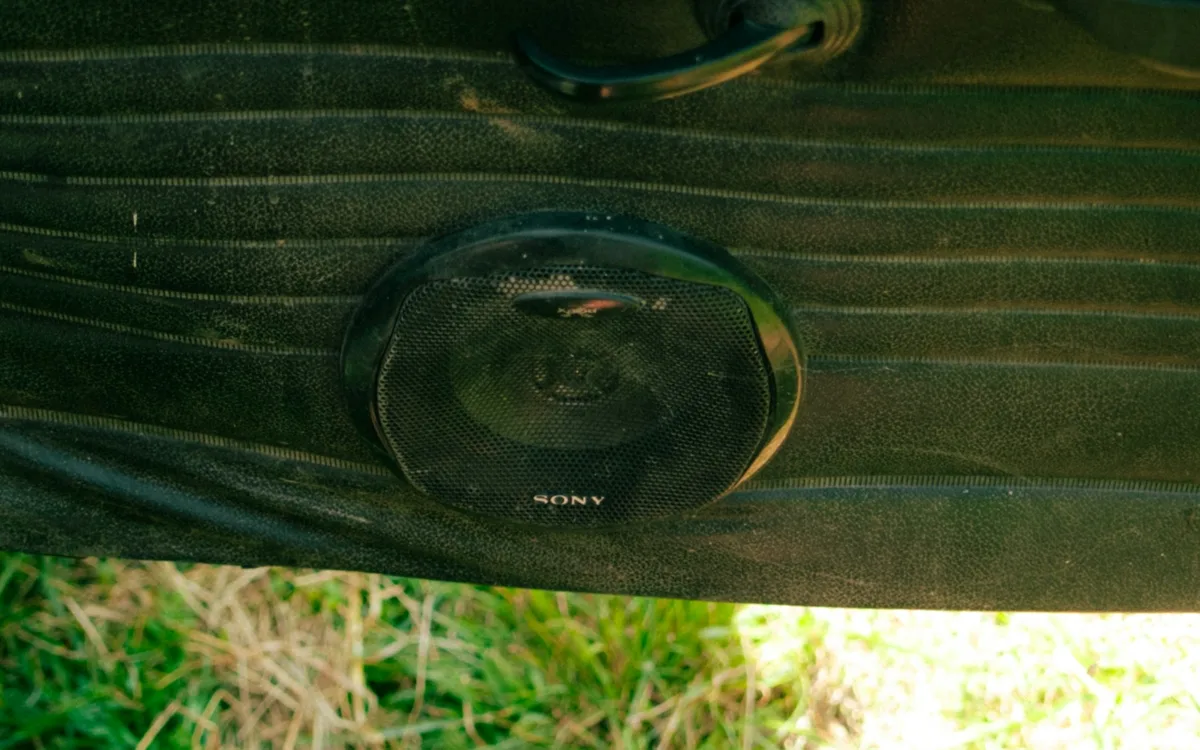
Car speakers rattle when something vibrates against something else: the speaker against its mount, the door panel against the door, or a damaged cone against its own parts. Santa Clarita Auto Sound notes that any loose brackets, screws and other components can cause speakers to rattle, and that door panels can resonate at certain frequencies (Santa Clarita Auto Sound, 2026).
| What you hear | Most likely cause |
|---|---|
| Buzz on bass notes, stops when you press the panel | Loose door panel or broken clip |
| Rattle from the speaker area at any volume | Loose mounting screws or weak adapter ring |
| Tapping or ticking inside the door | Loose wiring, rod or debris in the door |
| Fuzzy buzz that follows the music at low volume | Torn cone or surround, or rubbing voice coil |
| Rattle only with heavy bass | Speaker pushed below its range, or bass boost |
| Flutter behind the panel | Loose plastic moisture barrier |
Dynamat explains why doors are the usual source: the thin outer and inner door skins flex under speaker energy, which turns the door panel into a second, uncontrolled resonating surface (Dynamat, 2026).
A rattle is a mechanical noise, so it differs from electrical faults. If the noise is a crackle or pop that changes with the source or the wiring, see our guide on how to fix car speakers crackling instead. If it comes from the trunk when the subwoofer plays, our guide on stopping subwoofer vibration in your car covers trunk lids and license plates.
Step 1: Find Where the Rattle Comes From
Isolate the corner first. Use the balance and fader so only one speaker plays, then play the song or bass note that triggers the noise (TheFixCar, 2026).
Then press on one area of the door at a time while it plays: the grille, the door panel, the armrest, the door pocket and the window switch panel. ImproveCarAudio puts it well: the goal is not to find the loudest noise, but to find what is actually moving (ImproveCarAudio, 2026).
- If the rattle stops when you press the panel, the panel or its clips are loose.
- If it stops when you press the grille, the grille or the speaker mount is loose.
- If pressing changes nothing, lower the bass. A rattle that leaves with the bass points to the speaker being overdriven.
- If it stays at low volume on every song, suspect the speaker itself.
Empty the door pocket and cup holders before you start. Coins, pens and sunglasses in the pocket rattle just like a loose speaker.
Step 2: Tighten the Speaker and Its Mount
Remove the grille or door panel and check the speaker’s mounting screws. A speaker that is not clamped flat against its mount buzzes on every bass note. Tighten each screw evenly, and replace any that has stripped its hole with a slightly larger screw or a speed clip.
Check the adapter bracket if the speakers are aftermarket. ImproveCarAudio lists weak adapter rings among the common causes of door rattles (ImproveCarAudio, 2026). Thin plastic brackets flex, and wood spacers swell when they absorb moisture. Replace a cracked or warped bracket instead of tightening it further.
Our guide on how to install new speakers in car doors shows how to remove the panel without breaking clips.
Step 3: Seal the Speaker With Foam
Add a foam gasket or foam speaker ring between the speaker and its mount, and between the speaker and the door panel. Foam stops plastic-on-plastic contact and seals the gap so sound from the back of the cone does not leak around the front.
Crutchfield notes that a foam baffle mounted behind the speaker forms a mounting seal that also improves sound (Crutchfield, 2026). ImproveCarAudio lists a foam speaker gasket as one of the cheapest rattle fixes, along with closed-cell foam strips wherever trim touches trim (ImproveCarAudio, 2026).
Step 4: Fix Loose Door Panel Clips and Wiring
Check every panel clip when the panel is off. Broken or missing clips let the panel vibrate against the door, and they are a common result of earlier repairs. Replace any that are cracked; they are inexpensive and specific to each vehicle.
Then look inside the door for anything that can tap:
- Wiring harnesses resting against the panel or door skin. Wrap them in cloth harness tape and clip them down (ImproveCarAudio, 2026).
- The plastic moisture barrier. If it has come unstuck, it flutters behind the speaker. Press it back onto its sealant or re-seal it with butyl tape.
- Loose objects. Screws, broken clip pieces and old rivets collect at the bottom of the door.
- The crossover, on component systems. Secure it so it cannot move.
Rockford Fosgate also lists objects touching the speaker cone as a cause of distorted, rattling sound (Rockford Fosgate, 2020), so clear any debris from behind the grille. Our guide on cleaning car speakers shows how to do it without damaging the cone.
Step 5: Add Sound Deadening to the Door
If the door skin itself buzzes, add sound-deadening mat. These are butyl sheets with a foil face that add mass to thin metal so it stops resonating.
You do not need to cover the whole door. Dynamat says that at 25 to 50% coverage, rattles decrease, door buzz quiets down and midbass tightens up, and it calls 50 to 75% the sweet spot, with diminishing returns past that (Dynamat, 2026). Treat the outer skin directly behind the speaker first.
| Coverage of the door skin | What it does |
|---|---|
| 25 to 50% | Reduces rattles and door buzz |
| 50 to 75% | Best balance of results and cost |
| Over 75% | Diminishing returns |
Dynamat estimates that a pair of front doors uses 12 to 24 square feet (Dynamat, 2026); its sound deadening coverage guide breaks the numbers down by area. Budget brands cost less: Kilmat listed a 36 square foot box of 80 mil mat at $55.99 at the time of writing (Kilmat, 2026).
Deadening also improves the sound. BestCarAudio measured improvements of 10 dB in bass frequencies after sealing the openings in a door (BestCarAudio, 2020).
Step 6: Reduce the Bass Sent to the Door Speakers
If the rattle only appears with heavy bass, the speaker is being asked to play notes below its range. DS18 notes that boosted frequencies, especially in the bass range, can overwork speakers and cause rattling (DS18, 2025).
Start with the settings. Turn off bass boost and loudness, and bring the bass control back toward flat. Our guide to the best bass and treble settings for car speakers gives starting values.
Then use a high-pass filter if your stereo or amplifier has one. Crutchfield explains that a high-pass filter removes the notes below its setting so smaller drivers do not try to play bass they were not designed for (Crutchfield, 2025). SoundCertified suggests 56 to 80 Hz for door speakers, which blocks the low bass that causes distortion (SoundCertified, 2023). Our guide to the best crossover settings for car audio lists values by speaker size.
Step 7: Check Whether the Speaker Itself Is Damaged
If the rattle stays with the speaker when everything around it is tight, inspect the speaker. Look for splits, holes or tears in the cone, and a surround that has come unglued from the cone or the basket (Sonic Electronix, 2026). Rockford Fosgate lists a damaged cone, surround or spider among the causes of a rattling speaker (Rockford Fosgate, 2020).
Press the cone in gently and evenly with your fingertips. It should move smoothly and silently. A scraping feel means the voice coil is rubbing, and no amount of tightening will fix that.
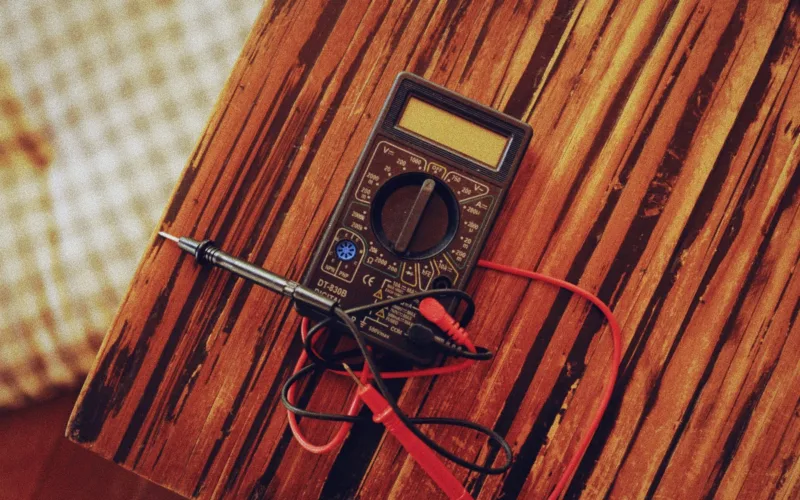
Confirm it with a multimeter before you buy a replacement. Our guide on how to test car speakers covers the resistance and battery checks, and fixing a blown car speaker explains which damage can be repaired.
How Much Does It Cost to Fix Rattling Car Speakers?
Most fixes cost very little. Foam gaskets, harness tape and replacement clips cost a few dollars each, and a box of sound-deadening mat covers two doors for well under $100.
| Fix | Typical cost |
|---|---|
| Tightening screws, clearing debris | Free |
| Foam gaskets, clips, harness tape | A few dollars each |
| Sound-deadening mat for two doors | About $56 for a 36 sq ft box (Kilmat, 2026) |
| Replacement coaxial door speaker | $30 to $150 in parts (TheFixCar, 2026) |
TheFixCar puts shop installation at $50 to $150 for a single door speaker (TheFixCar, 2026), so replacing the speaker yourself is the larger saving.
Frequently Asked Questions About Rattling Car Speakers
Why do my car speakers rattle when the bass hits?
Bass makes the cone move the most, which shakes anything loose nearby. The usual causes are a loose door panel, broken clips, loose speaker screws or a speaker playing bass below its range. Press on the door while the bass plays to find which part is moving.
How do I tell if my speaker is blown or the door panel is rattling?
Press on the panel and grille while music plays. If the noise changes or stops, it is the panel or mount. A blown speaker sounds fuzzy on every song at low volume, and pressing on the door does not change it.
Will sound deadening stop my door speakers from rattling?
It stops rattles caused by the door’s metal skin vibrating. Dynamat says 25 to 50% coverage reduces rattles and door buzz (Dynamat, 2026). It will not fix loose screws, broken clips or a damaged speaker, so check those first.
Do foam speaker rings stop rattling?
They help when the speaker or grille touches the door panel. Foam fills the gap, stops plastic-on-plastic contact and seals the speaker to the panel. They do not fix a rattle that comes from the door skin or a loose panel clip.
What should I set my high-pass filter to for door speakers?
Start between 60 and 80 Hz. SoundCertified recommends 56 to 80 Hz for door speakers to block the low bass that causes distortion (SoundCertified, 2023). Raise it if the speakers still rattle on bass notes.
Can a loose door panel clip cause speaker buzz?
Yes. A broken or missing clip lets the panel vibrate against the door when the speaker plays bass. Replacing the clip and adding a strip of closed-cell foam at the contact point usually stops it.
Summary: How to Fix Rattling Car Speakers
- Press on the door while the rattle plays to find what is moving.
- Tighten the speaker, seal it with foam, and replace broken clips and loose wiring.
- Add sound deadening to 25 to 50% of the door skin, starting behind the speaker.
- Cut deep bass with a high-pass filter, and replace the speaker if the cone or voice coil is damaged.