Quick Answer
- To get water out of car speakers, stop playing them, drain the door through its drain holes, blot the speaker gently and let it dry with room-temperature airflow for 24 to 48 hours (ImproveCarAudio, 2026).
- Water inside a door is normal. It is supposed to run down the inner door skin and exit through drain slots at the bottom (ImproveCarAudio, 2026).
- Speakers get soaked when a drain hole is clogged with dirt and leaves, or when the plastic vapor barrier behind the door panel is torn or missing.
- Avoid high heat. Excess heat can warp cones and surrounds (ImproveCarAudio, 2026).
- Replace the speaker if it still crackles, buzzes or scrapes after it is fully dry, and fix the leak first so the new one stays dry.
To get water out of car speakers, turn the stereo off, clear the drain holes at the bottom of the door so trapped water runs out, then dry the speaker with moving air at room temperature for one to two days. Remove the door panel if the speaker was soaked, so you can blot it, dry the terminals and check for damage. Most speakers survive a single wetting if they dry fully before they are played loud again.
How Water Gets Into Car Speakers
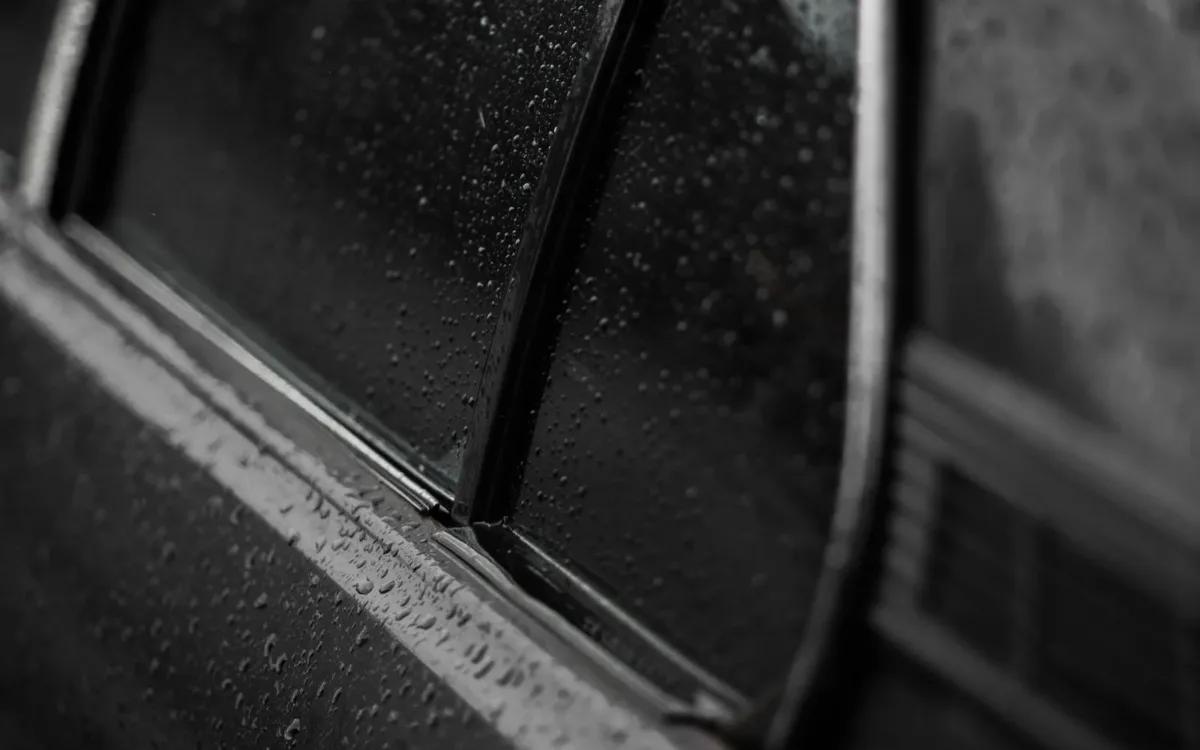
Water reaches car speakers through the door, not through the grille. ImproveCarAudio explains that rainwater slips past the outer window sweep, the rubber strip along the glass, and falls inside the door, which is a controlled wet area: water is supposed to run down the inner door skin and exit through drain slots (ImproveCarAudio, 2026).
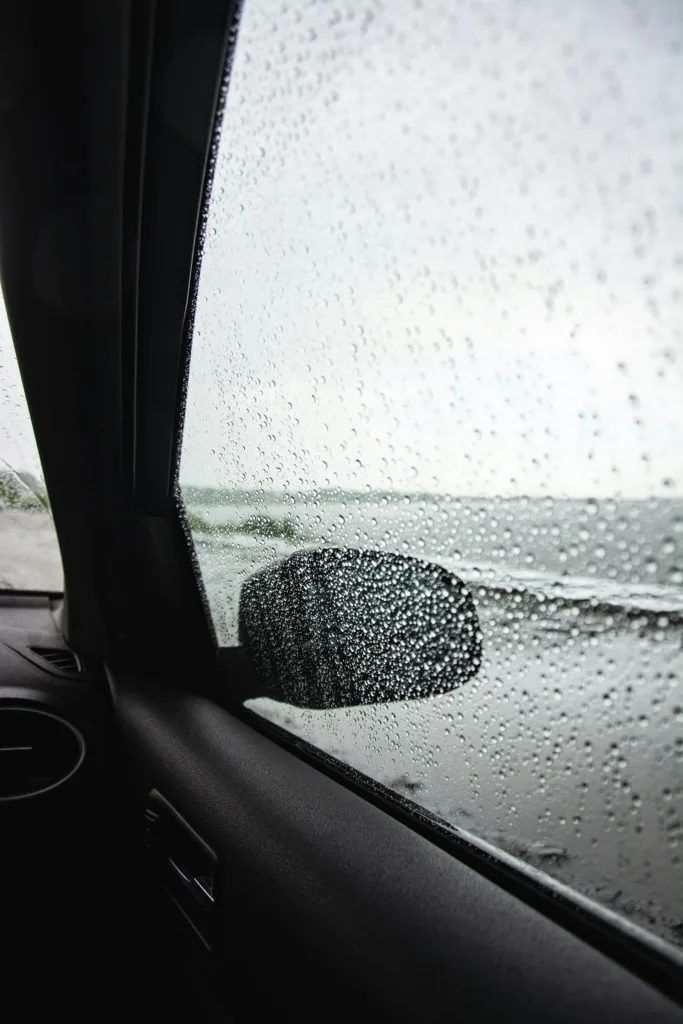
Infiniti’s parts guide says the same: water runs into car doors frequently, from heavy rain to a high-pressure car wash, and should exit quickly through a small drain at the bottom of the door (Infiniti, 2022).
Speakers get wet when that system fails. ImproveCarAudio lists three reasons: the vapor barrier is damaged, the drains are clogged, or the speaker sits in the drip path (ImproveCarAudio, 2026).
| Cause | What happens | Fix |
|---|---|---|
| Clogged drain holes | Water pools in the door and reaches the speaker | Clear the drains |
| Torn or missing vapor barrier | Water runs onto the back of the speaker and panel | Re-seal or replace the barrier |
| Window left open, spill or flood | Water hits the cone from the front | Dry the speaker and interior |
| Worn window seal | More water enters the door than the drains can handle | Replace the seal |
What Water Does to a Car Speaker
Most car speakers are not fully waterproof. ImproveCarAudio notes that they can handle normal humidity, occasional splashes and the small amount of moisture that finds its way inside doors, but paper-based cones absorb moisture easily (ImproveCarAudio, 2026).
A wet cone sounds muffled because the added moisture increases its mass (ImproveCarAudio, 2026). That part is temporary. The lasting damage comes later: corrosion on the terminals, a cone or surround that separates or tears, and a voice coil that starts to rub.
So a wet speaker can sound bad and still be fine once it is dry. The test is what it sounds like afterwards. TheFixCar notes that distortion after rain points to moisture damage, while static or popping points to loose wiring or corroded terminals (TheFixCar, 2026).
Step 1: Stop Using the Speakers and Find the Water
Turn the stereo off, or fade the sound away from the wet speaker. Playing a soaked paper cone loud can tear it while it is soft.
Then find out how much water there is. Open and close the door slowly and listen. CarParts.com describes the sign of a flooded door as an audible sloshing sound when driving, caused by built-up water inside the frame (CarParts.com, 2023). Check the carpet and the bottom edge of the door panel for damp patches too.
Step 2: Drain the Door
Clear the drain holes before anything else, because a speaker cannot dry while it sits above standing water. The drains are small slots or holes along the bottom edge of the door, often under the rubber seal.
Infiniti explains that water in car doors is typically caused by a clogged drain hole, blocked by dirt, road debris, leaves and even dead bugs (Infiniti, 2022). CarParts.com suggests poking the hole free with a small, pointed object (CarParts.com, 2023), and Infiniti suggests a plastic utensil. Plastic is the safer choice, because it will not scratch the paint and start rust.
Stand clear when the drain opens. A blocked door can hold a surprising amount of water. Leave the door open for a while so the cavity can air out.
Step 3: Remove the Door Panel if the Speaker Was Soaked
If the speaker was only splashed, you can skip this step and dry it in place. If water pooled in the door or came through an open window, remove the panel so you can reach the speaker and see the damage.
Disconnect the battery’s negative cable first, then remove the panel screws and clips. Our guide on how to install new speakers in car doors covers panel removal step by step. Unscrew the speaker, unplug it and bring it indoors.
Look at the plastic sheet behind the panel while you are there. CarParts.com describes the vapor barrier as a protective sheet attached by glue or sticky black putty to the door frame, which keeps the interior of the vehicle dry (CarParts.com, 2025). Tears and gaps in it are a common reason a door speaker gets wet. CarParts.com’s car door vapor barrier guide shows what a healthy one looks like.
Step 4: Dry the Speaker
Dry the speaker slowly. ImproveCarAudio’s method is to blot gently, use room-temperature airflow, clean and dry the terminals, and let the speaker sit with good ventilation (ImproveCarAudio, 2026).
- Blot the cone and surround with a soft cloth or paper towel. Press lightly; do not rub a wet paper cone.
- Set the speaker on a dry towel in a ventilated room.
- Point a household fan at it from a few feet away.
- Wipe the terminals dry and check them for green or white corrosion.
- Leave it for 24 to 48 hours, longer in humid weather.
ImproveCarAudio puts the drying time at often 24 to 48 hours with airflow, depending on temperature, humidity and how soaked the speaker was (ImproveCarAudio, 2026).
Three shortcuts are worth avoiding:
- High heat. A hair dryer on a hot setting or a heat gun can warp cones and surrounds (ImproveCarAudio, 2026).
- Rice. Apple’s guidance for wet phones warns that small particles of rice can cause damage (Apple, 2024), and the same dust can lodge in a speaker’s voice coil gap.
- Compressed air. Apple’s guidance also warns against it (Apple, 2024), because it can drive water further in.
Do Water Eject Sounds Work on Car Speakers?
No source we found shows that they do. Water eject tones play a low tone, typically around 165 Hz, that makes the small speaker in a phone or watch vibrate and fling droplets out of its grille (WaterKick, 2026).
A car door speaker is a different case. Its cone is open at the back, the water is usually in the door cavity or soaked into the cone, and there is no sealed chamber for a tone to clear. Playing a loud tone through a wet paper cone also risks tearing it. Draining and air drying are the methods that work.
Step 5: Test the Speaker Once It Is Dry
Refit the dry speaker and play music at a low volume, then raise it slowly. Listen for crackling, a buzz on every note or a scraping sound.
ImproveCarAudio describes the replace signal as crackling that persists after drying, caused by cone deformation, a torn surround or voice-coil rub (ImproveCarAudio, 2026). Press the cone in gently with your fingertips: it should move smoothly and silently.
Confirm it with a meter if you are unsure. Our guide on how to test car speakers covers the multimeter check, and corroded terminals that cause popping are covered in fixing crackling car speakers. If the cone has warped and the speaker now buzzes, see our guide on how to fix rattling car speakers to rule out the door before you replace it.
| After drying | What it means | What to do |
|---|---|---|
| Sounds normal | No lasting damage | Fix the leak and refit |
| Popping or static | Corroded terminals or wiring | Clean the terminals and connectors |
| Muffled or buzzing on every song | Warped cone or loose surround | Replace the speaker |
| Scraping when the cone moves | Voice coil rubbing | Replace the speaker |
What to Do After a Flood
Flood water is a different problem from rain. If water rose above the door sills, the speakers are a small part of the damage. Consumer Reports quotes State Farm’s warning that water in the electrical system could cause a fire, and advises drying the car out quickly and cleaning it thoroughly (Consumer Reports, 2026).
Do not turn on the stereo or the ignition in a flooded car until it has been inspected. AAA lists corrosion in the fuse boxes and malfunctioning electrical components among the signs of flood damage (AAA, 2024). Contact your insurer before you start repairs.
How to Keep Water Out of Car Speakers
Prevention is cheaper than replacement, and most of it is free.
- Clear the door drain holes a few times a year, and after autumn leaf fall.
- Repair the vapor barrier. CarParts.com recommends heavy plastic film sealed with butyl tape or silicone adhesive, and warns that duct tape dries out (CarParts.com, 2025).
- Add foam baffles behind the speakers. Crutchfield notes that baffles protect new speakers from moisture and dirt (Crutchfield, 2026).
- Choose water-resistant speakers if the car gets wet often. Polk’s DB6502, for example, is marine certified with an IP56 rating and is tested for salt-fog, UV and humidity (Polk Audio, 2026).
Marine-rated speakers use polypropylene cones and sealed parts instead of paper. Kicker’s KM marine coaxials, for example, pass a 200-hour salt fog test and use sealed motors and stainless hardware (Kicker, 2026). They suit convertibles, off-road vehicles and cars with leaking doors.
Dust and grit that wash into the speaker with the water can be cleaned off once everything is dry; our guide on how to clean car speakers shows the safe way.
Frequently Asked Questions About Water in Car Speakers
Can car speakers get wet and still work?
Often, yes. Most car speakers handle splashes and humidity, and a wet cone usually recovers once it is fully dry. Lasting damage shows up as crackling, buzzing or scraping that remains after drying.
How long does it take for a wet car speaker to dry?
Usually 24 to 48 hours with airflow, depending on temperature, humidity and how soaked it was (ImproveCarAudio, 2026). Leave it longer in cold or humid weather, and do not play it loud until it is fully dry.
Can I use a hair dryer to dry a car speaker?
Only on a cool setting, held well back. High heat can warp the cone and surround (ImproveCarAudio, 2026). A household fan at room temperature is safer and works just as well over a day or two.
Why is there water inside my car door?
Water enters every door past the window seal and is meant to drain out of holes at the bottom. If you hear sloshing, a drain hole is clogged with dirt or leaves. Clear it with a plastic tool and the water will run out.
Do I need to replace a speaker that got wet?
Not unless it still sounds wrong once dry. Replace it if it crackles, buzzes on every note or scrapes when you press the cone. Fix the clogged drain or torn vapor barrier first, or the new speaker will get wet too.
Are marine speakers worth it in car doors?
They are worth it if your doors leak, or for convertibles and off-road vehicles. Marine-certified speakers are tested against humidity, salt fog and UV exposure, and use cones and hardware that do not absorb water or rust.
Summary: How to Get Water Out of Car Speakers
- Stop playing the wet speaker and clear the door’s drain holes so trapped water runs out.
- Remove a soaked speaker, blot it and dry it with room-temperature airflow for 24 to 48 hours.
- Avoid high heat, rice and compressed air.
- Test it once dry, replace it if it still crackles or scrapes, and fix the leak so it stays dry.