Quick Answer
- A crossover works for car audio by splitting one full-range music signal into frequency bands, so tweeters get the highs, door speakers get the mids and the subwoofer gets the deep bass.
- It does this with filters: a high-pass filter blocks notes below a set frequency, a low-pass filter blocks notes above it, and a band-pass filter keeps only the range in between (Crutchfield, 2025).
- Passive crossovers use capacitors and coils after the amplifier and need no power. Active crossovers filter the low-level signal before the amplifier and need power, ground and a remote turn-on wire (Crutchfield, 2025).
- The crossover point is where the filter has cut the signal by 3 dB, and the slope (6, 12, 18 or 24 dB per octave) sets how fast sound fades past that point (Crutchfield, 2026).
- Typical starting points are a tweeter high-pass near 3,500 Hz, a door speaker high-pass at 80 Hz and a subwoofer low-pass at 70 to 80 Hz (Audio Intensity, 2026).
A crossover for car audio works like a traffic controller for sound. It takes the full-range signal from your head unit or amplifier and sends high notes to the tweeters, midrange notes to the door speakers and deep bass to the subwoofer. Each speaker then plays only the range it was built for, which lowers distortion and protects small speakers from bass they cannot handle.
What Is a Car Audio Crossover?
A car audio crossover is a filter network that divides one audio signal into two or more frequency bands and sends each band to a different speaker. Crutchfield describes it as a device that takes a single full-range input and separates it into high, mid and low frequencies, so each speaker gets only the range it was designed to play (Crutchfield, 2025).
Every car speaker system has some kind of crossover. Component speaker sets come with separate crossover boxes, and every coaxial speaker, with its tweeter mounted in front of the woofer cone, has a small crossover built into it (Crutchfield, 2025).
Why Car Speakers Need a Crossover
No single speaker can play the whole range of human hearing, which runs from about 20 Hz to 20,000 Hz (Crutchfield, 2026). A 1-inch tweeter is too small to move the air that bass needs, and a 12-inch subwoofer cone is too heavy to follow fast treble notes.
A crossover solves two problems. The first is protection. A 1-inch dome tweeter asked to play 200 Hz at real volume pushes its voice coil past its mechanical limits and can fail within a song or two (Audio Intensity, 2026). The second is clarity. When two speakers at different distances from your ears play the same notes, the sound waves arrive at slightly different times and partly cancel, which leaves a dip in the response (Audio Intensity, 2026).
How a Crossover Splits the Signal: The Four Filter Types
A crossover splits the signal with four types of filters, and each one decides which notes pass through to a speaker. Most car systems use at least two of them: a high-pass filter on the front speakers and a low-pass filter on the subwoofer.
| Filter | What it lets through | Typical speaker |
|---|---|---|
| High-pass (HPF) | Notes above the set frequency | Tweeters and door speakers |
| Low-pass (LPF) | Notes below the set frequency | Subwoofers and midbass |
| Band-pass | Notes between two frequencies | Midrange in a 3-way system |
| Subsonic | Everything except very deep bass | Subwoofers in ported boxes |
A high-pass filter, also called a low-cut filter, removes notes below its setting, so tweeters and door speakers do not try to play bass. A low-pass filter, also called a high-cut filter, removes notes above its setting, so the subwoofer does not play vocals or cymbals (Crutchfield, 2025).
A band-pass filter combines both. Crutchfield’s example of a simple 3-way system uses a low-pass at 80 Hz for the subwoofer, a high-pass at 3,000 Hz for the tweeters and a band-pass from 80 Hz to 3,000 Hz for the midrange speakers (Crutchfield, 2025). A subsonic filter is a high-pass set very low, usually for a ported subwoofer, that removes deep notes the box cannot control.
What the Crossover Point Means
The crossover point is the frequency where the filter has turned the signal down by 3 dB, which is half its power (Crutchfield, 2026). It is the handoff point between two speakers. Below it, one speaker does most of the work, and above it, the other one takes over.
Think of it as a relay race. The baton is the music, and the crossover point is the stretch of track where both runners hold the baton for a moment. If the handoff is set well, the listener hears one smooth sound instead of two speakers.
With Linkwitz-Riley filters, the most common type in car audio processors, each speaker is 6 dB down at the crossover point, and the two outputs add back up to a flat response (Linkwitz, 1976). This is why most tuners set the high-pass on the upper speaker and the low-pass on the lower speaker to the same frequency.
How Crossover Slopes Work
The slope is how quickly a crossover turns down the notes past the crossover point, measured in decibels (dB) per octave. An octave is a doubling or halving of frequency, so one octave below 3,000 Hz is 1,500 Hz and one octave above 80 Hz is 160 Hz (Crutchfield, 2026).
With a 24 dB per octave high-pass at 3,000 Hz, a 1,500 Hz note reaches the tweeter 24 dB quieter, and a 750 Hz note arrives 48 dB quieter. A 6 dB per octave slope would let far more of those lower notes through. Crutchfield notes that with slopes of 12 dB and higher, you hear little output beyond the crossover point (Crutchfield, 2026).
| Slope | Filter order | Where you see it |
|---|---|---|
| 6 dB/octave | First order | Single-capacitor tweeter filters and bass blockers |
| 12 dB/octave | Second order | Many component speaker crossovers and amplifiers |
| 18 dB/octave | Third order | Some amplifiers and processors |
| 24 dB/octave | Fourth order | Default in most DSPs and active crossovers |
Butterworth vs Linkwitz-Riley Filters
Butterworth and Linkwitz-Riley are the two filter types you will see most on amplifiers and processors. A Linkwitz-Riley filter is built from two Butterworth filters in series, which is why it is sometimes called a Butterworth-squared filter (Linkwitz, 1976).
The difference shows up when two speakers play together. An even-order Butterworth crossover sums to a bump of about 3 dB at the crossover point, while a Linkwitz-Riley crossover sums flat (Linkwitz, 1976). A 24 dB per octave Linkwitz-Riley crossover also keeps both speakers in phase, while a 12 dB per octave version puts them 180 degrees apart, so one speaker usually needs its polarity reversed. The Linkwitz-Riley filter reference covers the math if you want it.
Passive vs Active Crossovers: Where Each Sits in the Signal Path
Passive and active crossovers do the same job but sit in different places in the system. A passive crossover goes between the amplifier and the speakers and works with the amplified signal. An active crossover goes between the head unit and the amplifiers and works with the low-level signal (Crutchfield, 2025).
| Feature | Passive crossover | Active crossover |
|---|---|---|
| Position | After the amplifier | Before the amplifier |
| Power wiring | None | 12-volt power, ground and remote |
| Adjustment | Fixed points, sometimes a tweeter level switch | Adjustable frequency, slope and level |
| Amplifier channels | One channel can drive a tweeter and woofer pair | One channel for each speaker |
Passive crossovers are simple and come with most component speaker sets. Their downside is that they filter power that has already been amplified, which creates heat and lowers speaker efficiency (Crutchfield, 2025).
Active crossovers let you choose the crossover points and set the volume of each speaker group separately (Crutchfield, 2025). A digital signal processor (DSP) is an active crossover that works in software, so you can set filters precisely and save several setups (Crutchfield, 2026). To see what else a processor adds, read our guide on how a DSP works in car audio.
How a Passive Crossover Works Inside
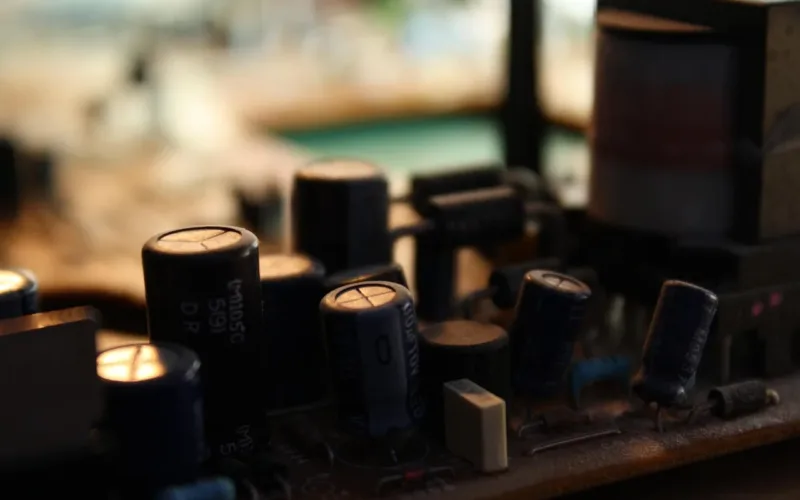
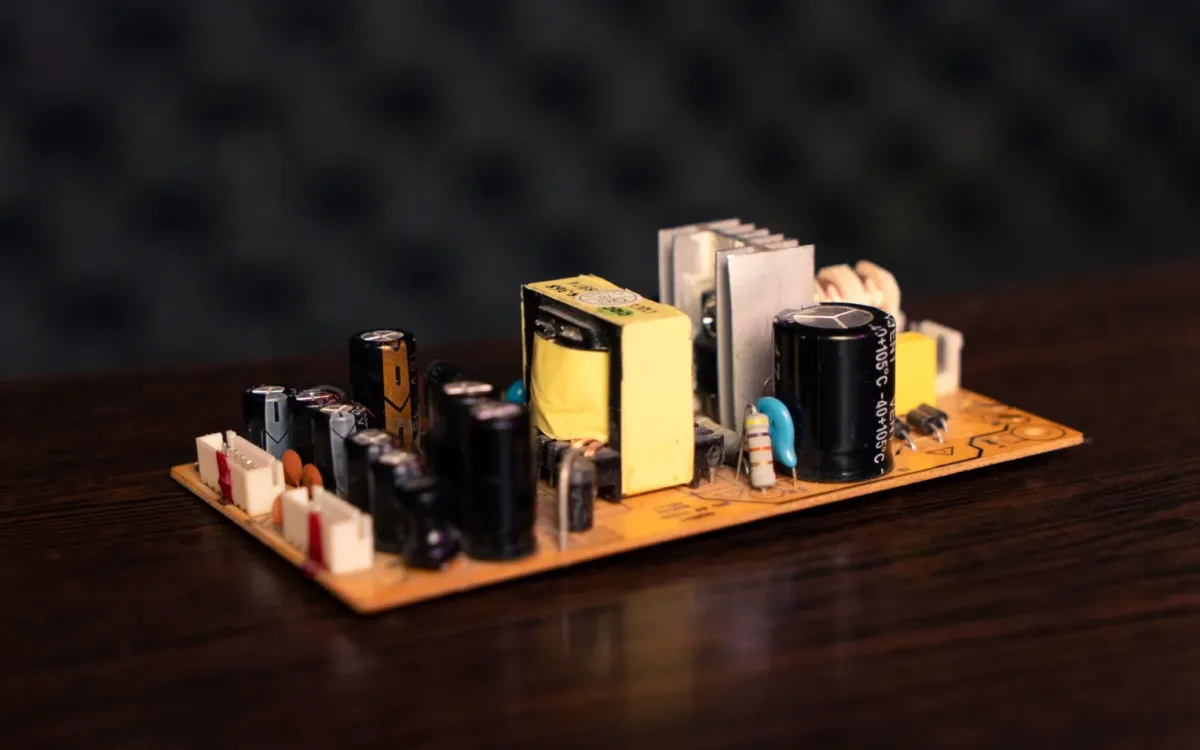
A passive crossover works with two parts: capacitors and inductors. A capacitor placed in series with a speaker acts as a high-pass filter, and a coil, or inductor, placed in series acts as a low-pass filter (Crutchfield, 2026).

The reason is physics. A capacitor resists low frequencies more than high ones, so treble passes to the tweeter and bass is blocked. A coil does the opposite and resists high frequencies, so bass passes to the woofer and treble is blocked. Adding more parts in the network makes the slope steeper.
Many passive crossovers also have resistors for a tweeter level switch. Common settings are 0 dB, -3 dB and sometimes -6 dB or +3 dB, which let you turn the tweeter down if it sounds too bright (Crutchfield, 2025).
One limit of passive parts is that their crossover point depends on the speaker load they were designed for. Crutchfield notes that in-line RCA crossovers can react differently with different amplifiers, which can move their crossover points unpredictably (Crutchfield, 2026).
What a Well-Set Crossover Sounds Like
A well-set crossover sounds like one wide speaker in front of you. Vocals sit on the dashboard, the tweeters are clear without sounding harsh, and the bass sounds like it comes from the front of the car instead of the trunk.
A badly set crossover is easy to spot. If the subwoofer low-pass is too high, you can hear where the bass comes from, because the ear starts to locate bass above roughly 80 Hz (Audio Intensity, 2026). If the tweeter high-pass is too low, the tweeter distorts and can burn out. If the door speakers run full range next to a subwoofer, they rattle and distort on deep bass.
If you already know how a crossover works and want exact numbers, our guide to the best crossover settings for car audio lists starting values by speaker size.
Typical Crossover Frequencies in a Car
Most car systems use crossover points close to these values. Audio Intensity uses 24 dB per octave Linkwitz-Riley filters at these starting frequencies on customer systems (Audio Intensity, 2026).
| Speaker | High-pass | Low-pass |
|---|---|---|
| 1-inch dome tweeter | 3,500 Hz | None |
| 6.5-inch door speaker | 80 Hz | 3,500 Hz (2-way) |
| 10-inch sealed subwoofer | None | 80 Hz |
| 12-inch sealed subwoofer | None | 70 Hz |
The right values for your car depend on your speakers and where they are mounted. For the full process of dialing them in, see how to set crossover frequency for a car audio system. If you are adding one to your system, our step-by-step guide to installing a car audio crossover covers passive and active wiring, and the guide on using a crossover in car audio explains the controls. To choose hardware, see our roundup of the best car audio crossover options.
Frequently Asked Questions About Car Audio Crossovers
What does a crossover do in a car audio system?
A crossover splits the music signal into frequency bands and sends each band to the right speaker: highs to the tweeters, mids to the door speakers and bass to the subwoofer. This protects small speakers from bass and reduces distortion.
Do I need a crossover if I have coaxial speakers?
Coaxial speakers already have a small crossover built in for their tweeter. If you add a subwoofer, you should still use a high-pass filter on the coaxial speakers and a low-pass filter on the subwoofer, usually around 80 Hz.
Is an active or passive crossover better?
Active crossovers give more control because you can change the frequency, slope and level of each speaker, but they need more amplifier channels and wiring. Passive crossovers are simpler and work well with a matched component speaker set.
What happens if a crossover is set wrong?
A tweeter high-pass set too low can make the tweeter distort or burn out. A subwoofer low-pass set too high makes the bass sound like it comes from the trunk, and a gap between speakers leaves a thin spot in the sound.
Can my amplifier’s built-in crossover replace a separate crossover?
Yes, for many systems. Most 4-channel and mono amplifiers have high-pass and low-pass filters, which are enough for front speakers plus a subwoofer. A separate active crossover or DSP is useful for 3-way systems or when you want finer control.
Does a crossover improve sound quality?
Yes. Each speaker plays only the range it handles well, so distortion drops and the speakers blend better. A crossover also lets you play the system louder, because the small speakers are no longer wasting power on deep bass.
Summary: How Does a Crossover Work for Car Audio
- A crossover divides one signal into bands with high-pass, low-pass, band-pass and subsonic filters.
- The crossover point is the 3 dB handoff between two speakers, and the slope sets how fast sound fades past it.
- Passive crossovers use capacitors and coils after the amplifier, while active crossovers and DSPs filter the signal before it.
- Start near 3,500 Hz for tweeters, 80 Hz for door speakers and 70 to 80 Hz for subwoofers, then adjust for your car.