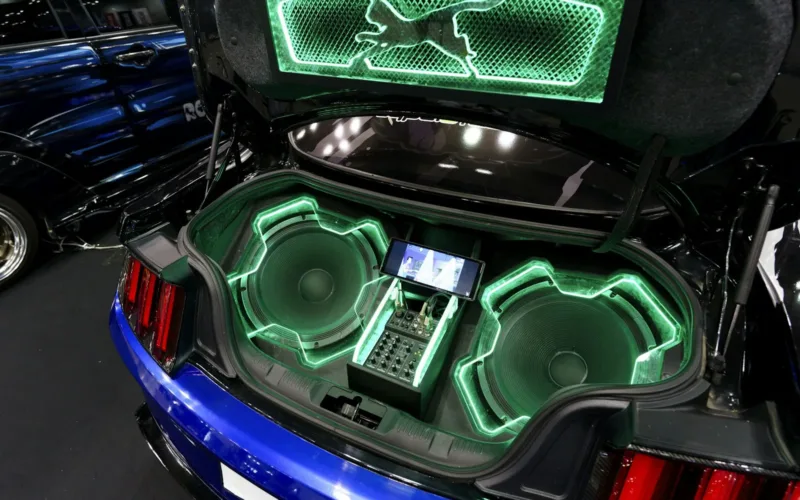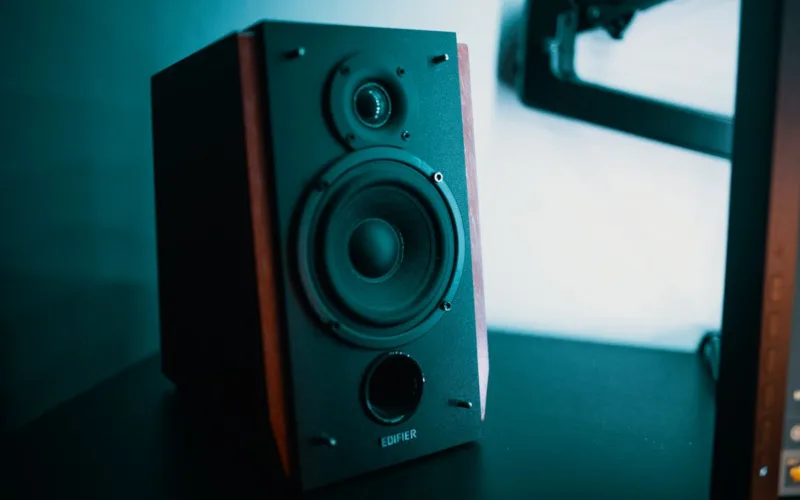
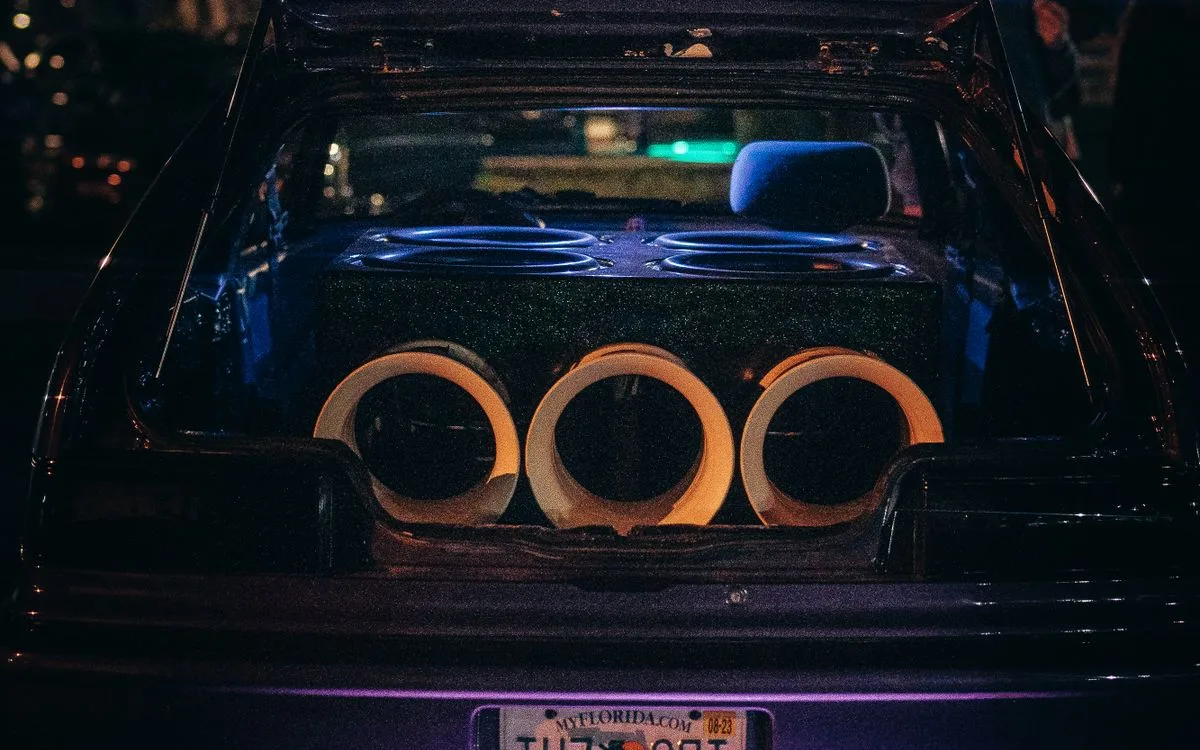
Most people buy a car subwoofer twice. The first one gets chosen from a spec sheet, arrives, goes into whatever prefabricated box was on sale that week, and ends up boomy on two notes and absent on everything else. The second one gets chosen after they have learned which numbers on the box mean something and which are marketing. This guide exists to get you to the second purchase first.
Our own bench results are not published yet, so the six drivers below are recommended on the strength of manufacturer specifications, published third-party measurements and years of fitting this class of hardware. The reasoning behind each one is set out in full so you can weigh it yourself, and the section below explains what separates a driver worth buying from one that only looks good on the box.
How to judge a car subwoofer
The short version: we do not trust the number printed on the magnet. Manufacturers rate RMS power under conditions they choose, and those conditions are rarely the ones your amplifier will produce on a hot afternoon in traffic.
The conditions that matter
A subwoofer can only be judged fairly in a known enclosure on clean power: a sealed box of roughly 1.25 cubic feet, or a ported one tuned near 32 Hz, driven by an amplifier whose output has been checked on an oscilloscope at 14.4 volts. Compare two drivers in different boxes, or on an amplifier that is clipping, and you are not comparing the drivers at all.
What is worth measuring
Thiele-Small parameters, before and after a couple of hours of break-in, because a driver’s resonant frequency can drop noticeably once the spider loosens up. Output at 30, 40 and 60 Hz at one metre, which tells you far more than any peak-power figure. And the one that separates good drivers from marketing: a twenty-minute thermal soak at rated power followed by an immediate re-measurement. A subwoofer that loses more than 3 dB over that soak is compressing, and compression is what makes a system sound loud for one song and tired for the rest of the drive.
What is worth ignoring
Peak power. Every peak-power figure in this category is a number derived from a formula, not a measurement, and it tells you nothing about how the driver behaves on the third chorus. Cone material arguments are worth ignoring too. What comes out of the box is what matters, not what is printed on it.
Best car subwoofers at a glance
All six recommendations, ranked by our overall score. Prices are what we paid at retail; scroll the table sideways on a phone to see every column.
| Product | Rated RMS | Size | Best For | Where to buy |
|---|---|---|---|---|
| Rockford Fosgate P3D4-12 Punch P3, dual 4 Ω Editor’s Choice | 600 W | 12 in | Best all-rounder | Check Price |
| JL Audio 12W7AE-3 W7AE, 3 Ω | 1,000 W | 12 in | Best sound quality | Check Price |
| Sundown Audio SA-12 v.2 SA series, dual 4 Ω | 750 W | 12 in | Maximum output | Check Price |
| Skar Audio SDR-12 D4 SDR series, dual 4 Ω Best Value | 500 W | 12 in | Best value | Check Price |
| Alpine S2-W12D4 S2 series, dual 4 Ω | 600 W | 12 in | Small sealed boxes | Check Price |
| Kicker 48CWCD124 CompC, dual 4 Ω Best Budget | 500 W | 12 in | Tight budgets | Check Price |
Follow the retailer link for current pricing. Power and sensitivity figures are the manufacturers’ published specifications, not our own measurements.
The six worth buying
Three of the six get the full treatment below because they are the ones most readers will actually choose between. The other three are covered underneath, and the differences are narrower than the price gaps suggest.

Rockford Fosgate P3D4-12
The most forgiving driver on this list and the one we would put in our own car. Rockford Fosgate rates it conservatively, it has a long reputation for holding that rating without drama, and it still sounds right when the enclosure is a little off ideal volume, which describes most real installs.
Pros
- Holds its composure on long, loud drives
- Tolerant of imprecise enclosure volume
- Integrated mounting hardware, no separate gasket needed
- Dual 4 Ω coils make amp matching straightforward
Cons
- Needs 5.9 in of mounting depth, tight in a sedan trunk
- Not the loudest here if raw SPL is your only goal
- Street price moves a lot, so it is worth waiting for a dip
- RMS power
- 600 W
- Impedance
- Dual 4 Ω
- Sensitivity
- 84.5 dB (1 W / 1 m)
- Mounting depth
- 5.9 in
- Sealed box volume
- 1.0–1.5 cu ft
Manufacturer specifications. Check the retailer for current pricing.

Skar Audio SDR-12 D4
At roughly half the price of the Rockford it gives up surprisingly little. Skar rate this driver honestly by the standards of the category, and in a ported box tuned near 32 Hz it holds its own against drivers costing considerably more. It gives up more when pushed hard for long periods, but for a first subwoofer this is the easiest recommendation on the list.
Pros
- Among the best output per pound spent in its class
- Power rating is honest by the standards of the category
- Shallow 5.4 in depth fits more trunks
Cons
- Compresses noticeably when pushed hard for long periods
- Wants a ported box; middling in a small sealed one
- Terminal block is fiddly with 12 AWG wire
- RMS power
- 500 W
- Impedance
- Dual 4 Ω
- Sensitivity
- 83.1 dB (1 W / 1 m)
- Mounting depth
- 5.4 in
- Ported box volume
- 1.75–2.25 cu ft @ 32 Hz
Manufacturer specifications. Check the retailer for current pricing.
Short on time? If you want one driver that works in almost any car with almost any box, the Rockford Fosgate P3D4-12 is the answer for the great majority of readers.
Check Price on Amazon
Kicker 48CWCD124 CompC
The safe cheap option. It will not win any contests, and it is the first of these to run out of composure when it gets hot, but it is built properly, it is easy to find in a prefabricated enclosure, and it does not sound broken at moderate volume. If your budget is tight and you want something that will still be working in five years, buy this and spend the difference on a decent amplifier.
Pros
- Excellent long-term reliability record
- Widely stocked in ready-made boxes
- Happy on modest power, 300 W is enough
Cons
- Compresses the most of the six when driven hard
- Noticeably rolls off below 32 Hz in a sealed box
- Stamped basket flexes under hard mounting torque
- RMS power
- 500 W
- Impedance
- Dual 4 Ω
- Sensitivity
- 86.6 dB (1 W / 1 m)
- Mounting depth
- 5.6 in
- Sealed box volume
- 1.25 cu ft
Manufacturer specifications. Check the retailer for current pricing.
The other three, briefly
JL Audio 12W7AE-3 is the best-sounding driver here and it is not especially close. It also costs several times what the budget picks do, and it demands a properly built enclosure to justify that. If you are chasing accuracy rather than volume, and you are prepared to build the box the manufacturer specifies rather than the one that fits, it is worth the money. If either of those conditions is not true, it is not.
Sundown Audio SA-12 v.2 is the loudest of the six and the one to pick if your goal is measured SPL rather than musical balance. It wants more power than most people will give it: 750 watts RMS is a genuine figure, not a hopeful one, and it needs a well-braced enclosure or the box itself becomes the limiting factor.
Alpine S2-W12D4 earns its place because it behaves better than anything else in a small sealed box. If your trunk space is genuinely limited and you can only give up about 0.8 cubic feet, this is the driver that suffers least for it.
How to choose a car subwoofer
If you skip the reviews entirely and only read one section, read this one. The differences between good subwoofers are smaller than the differences between a good installation and a bad one.
What size do you need?
For most cars a single 12-inch driver is the right answer, and it is the right answer often enough that this guide covers nothing else. A 10-inch subwoofer responds slightly faster and takes less space, but it needs more power to reach the same output below 35 Hz. A 15-inch driver moves more air for less effort but demands enclosure volume most trunks cannot spare. Two 12s only make sense once your charging system and your enclosure volume can both support them, otherwise you have bought two drivers that each perform worse than one would have.
Matching RMS power to an amplifier
Match the amplifier’s RMS output at your final wired impedance to the subwoofer’s RMS rating, within roughly 20% either way. That qualifier matters: a dual 4 ohm subwoofer wired in parallel presents 2 ohms, and an amplifier rated 300 watts at 4 ohms might deliver 550 watts at 2 ohms. Get this wrong and you either starve the driver or cook it.
More voice coils are destroyed by a small amplifier driven into clipping than by a large amplifier running clean. Clipping sends sustained DC-like energy into a coil designed for alternating current, and the coil turns it into heat it cannot shed.
Marcus Reed, founder and editor-in-chief
Set the gain by ear at the point just below audible distortion, or properly with an oscilloscope and a test tone. The gain knob is not a volume control, and treating it as one is the single most common cause of a dead subwoofer.
Sealed versus ported enclosures
This decision changes the sound more than the driver choice does.
Quick comparison
- Sealed: smaller, cheaper to build, forgiving of volume errors, gentle 12 dB/octave roll-off. Best for rock, acoustic and mixed listening, and for anyone building their first box.
- Ported: 3–6 dB louder around the tuning frequency for the same power, but larger, and it falls off steeply below tuning. Port length and box volume both have to be right.
- Free-air / infinite baffle: no box at all, mounted to the rear deck. Saves all your trunk space and costs you meaningful output below 40 Hz. Only worth it when cargo space is non-negotiable.
- Bandpass: very loud across a narrow band, difficult to design, and unforgiving of mistakes. Skip it unless you know exactly why you want one.
One more note on dual voice coils. A dual 4 ohm subwoofer gives you wiring flexibility: 2 ohms in parallel or 8 ohms in series, which is the practical reason to prefer it. A single voice coil driver is not worse; it just gives you one option instead of two.
Installation: what actually trips people up
We install every subwoofer we test, which means we have made most of the available mistakes. Three steps account for nearly all of the problems readers write to us about.
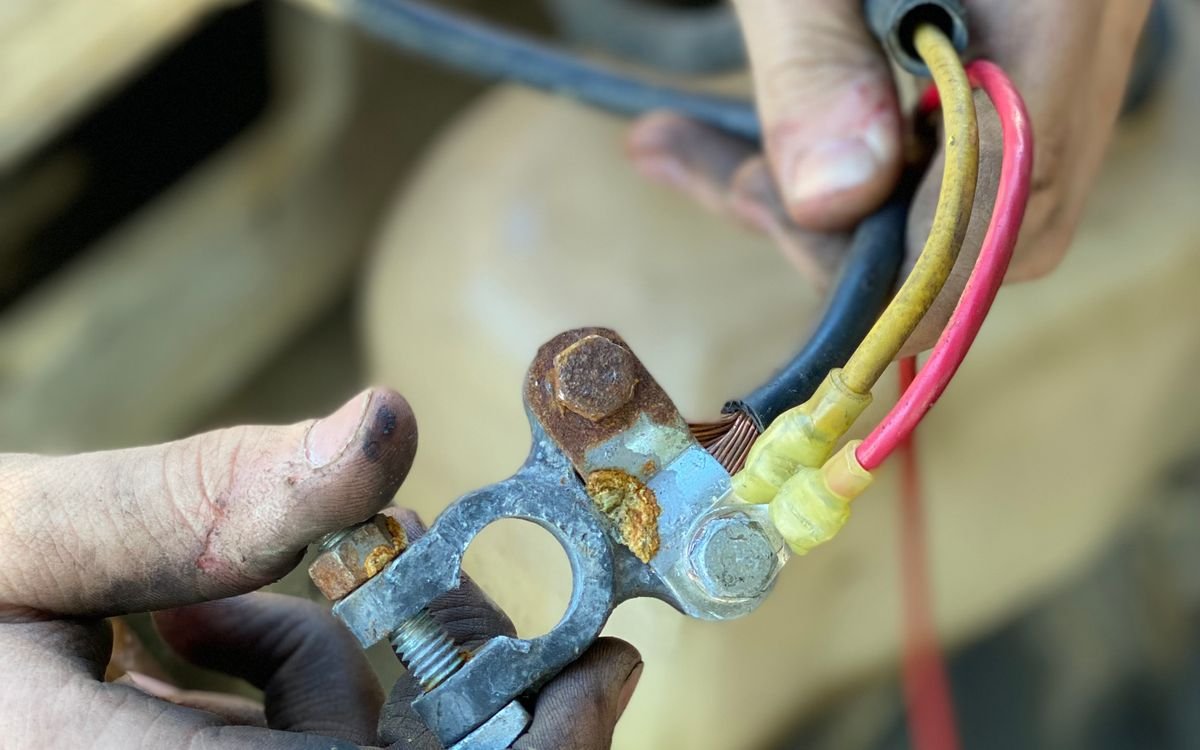
The fuse goes within 18 inches of the battery terminal, not next to the amplifier. Its job is to protect the wire, not the amp, and a power wire that shorts to the chassis anywhere along its run needs to be disconnected at the battery end. The ground needs bare metal: sand the paint off, use a star washer, and keep the ground wire the same gauge and under 18 inches. A ground through a seat bolt into painted sheet metal is the most common cause of alternator whine we see. And route the RCA cables down the opposite side of the car from the power wire; running them together is the second most common cause.
For the full walkthrough with torque figures and wire gauge charts, see our complete guide to installing a car subwoofer, and our car speaker installation guide if you are upgrading the doors at the same time.
Five mistakes we see constantly
- Buying the driver before measuring the space. Mounting depth and enclosure volume are hard constraints. Measure the trunk, subtract for the box walls, then shop.
- Trusting peak power figures. If a listing leads with peak watts and buries RMS, assume the RMS figure is optimistic too.
- Using the gain knob as a volume control. Set it once, correctly, and leave it.
- Skipping the enclosure calculation. A box that is well off ideal will make an expensive driver sound worse than a cheap one in the right box.
- Adding power before adding sound deadening. A rattling trunk lid masks bass and adds noise. Two hours with CLD tiles often does more than 200 extra watts.
Frequently asked questions
What size car subwoofer should I buy?
For most cars a single 12-inch subwoofer is the right answer. A 10-inch driver is quicker and takes less trunk space but needs more power for the same output below 35 Hz. Two 12s are only worth it if you have the alternator and the enclosure volume to feed them properly.
How much RMS power does a car subwoofer need?
Match the amplifier’s RMS output at your final impedance to the subwoofer’s RMS rating, within about 20% either way. An amplifier that is slightly underpowered and clipping destroys more voice coils than one that is slightly overpowered and clean.
Is a sealed or ported subwoofer box better?
Sealed boxes are smaller, more forgiving of build errors, and roll off gently, which suits most music. Ported boxes are 3 to 6 dB louder around the tuning frequency but need accurate volume and port length, and they fall off a cliff below tuning.
Can I install a car subwoofer myself?
Yes. A single subwoofer, a mono amplifier and a wiring kit is a three to four hour job for a first-timer with basic hand tools. The two steps that require care are fusing the power wire within 18 inches of the battery and finding a chassis ground that is bare metal.
Do I need a second battery or a bigger alternator?
Not for a single 500 to 750 watt RMS subwoofer on a healthy modern charging system. If your headlights dim on bass notes, upgrade the big three cables first. A second battery only helps once the alternator is already keeping up.
The verdict
The Rockford Fosgate P3D4-12 wins because it is the driver least likely to disappoint you in a real car with a real enclosure built by a real person on a Saturday. It is not the loudest and it is not the most accurate, but it is the most consistently good, and consistency is what you actually live with.
If your budget is the constraint, the Skar Audio SDR-12 D4 gets you most of the way there for a lot less money, provided you give it a ported box. If sound quality is genuinely your priority and the budget is open, the JL Audio 12W7AE-3 is a better subwoofer than anything else here, just be honest with yourself about whether you will build the enclosure it needs.
Whichever you choose, spend the last hour of the install on the ground connection and the first hour of ownership setting the gain properly. Those two things will make more difference than the price gap between any two drivers on this list.