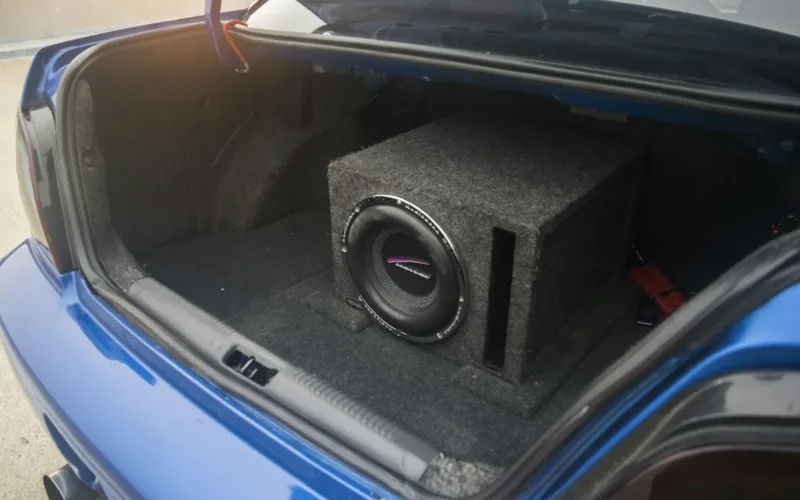

The gauge number printed on an amplifier wiring kit is not regulated, and a surprising amount of what is sold as 4 gauge is copper-clad aluminium drawn to a diameter that would be 4 gauge if it were copper. It is not, it carries roughly 60% of the current, and it is the reason a great many amplifiers behave as though they are underpowered.
OFC and CCA are not interchangeable
Oxygen-free copper carries more current per unit of cross-section than copper-clad aluminium, so a CCA kit needs to be roughly two gauge sizes larger to do the same job. A 4 gauge CCA run behaves about like 6 gauge copper. That is fine if you bought it knowing, and a problem if the packaging implied otherwise.
How to tell what you are buying
- Copper is noticeably heavier. A 20 foot 4 gauge OFC run has real heft to it
- Cut an end and look: CCA is silver under the copper skin
- If the listing does not say OFC anywhere, assume CCA
- Price is a reliable signal here. Copper costs what copper costs
Sizing the run
Work from current, not from the amplifier’s badge. Divide the amplifier’s RMS power by roughly 10 to get a working current figure in amps, then size the cable for that current over the length of the run. A 1,000 watt amplifier is drawing on the order of 100 amps, and over a 17 foot run from a front-mounted battery to a boot-mounted amplifier that is 4 gauge copper territory, not 8.
Rule of thumb: if the kit is cheaper than the cable alone would be at a hardware store, it is not copper.
Check Price on AmazonThe fuse, and where it goes
The fuse protects the cable, not the amplifier. Its job is to open before a power wire that has chafed through to the chassis can turn into a heating element. That is why it belongs within 18 inches of the battery terminal, ahead of the entire run, and not next to the amplifier where most kits’ instructions imply.
Size it to the cable, not to the amplifier. A 4 gauge copper run is good for roughly 150 amps, so a 150 amp fuse is correct even if the amplifier only draws 100.
What else is worth buying
Ring terminals that are crimped rather than folded over. A distribution block if you are running more than one amplifier, so you are not stacking three ring terminals on one stud. Split loom for anything that crosses a metal edge. And enough spare wire that you are not routing the shortest possible path through the same grommet as the ECU harness, which is how alternator whine gets in.